
How Credit Scores Work and What Affects Yours
Your credit score is a three-digit number that quietly shapes a surprising amount of your financial life. It affects the interest rate on a car loan, whether a landlord approves your apartment application, and in some states even what you pay for car insurance. Yet most people learn how it works only after something goes wrong. Let’s fix that now.
The most important thing to understand up front: a credit score is not a judgment of your worth. It’s a prediction. Lenders are asking one question — “how likely is this person to pay us back?” — and your score is the industry’s best statistical guess at the answer, based on your past behavior with credit.
FICO Score Ranges: What the Numbers Mean
The score most lenders use is the FICO score, which runs from 300 to 850. The general tiers look like this:
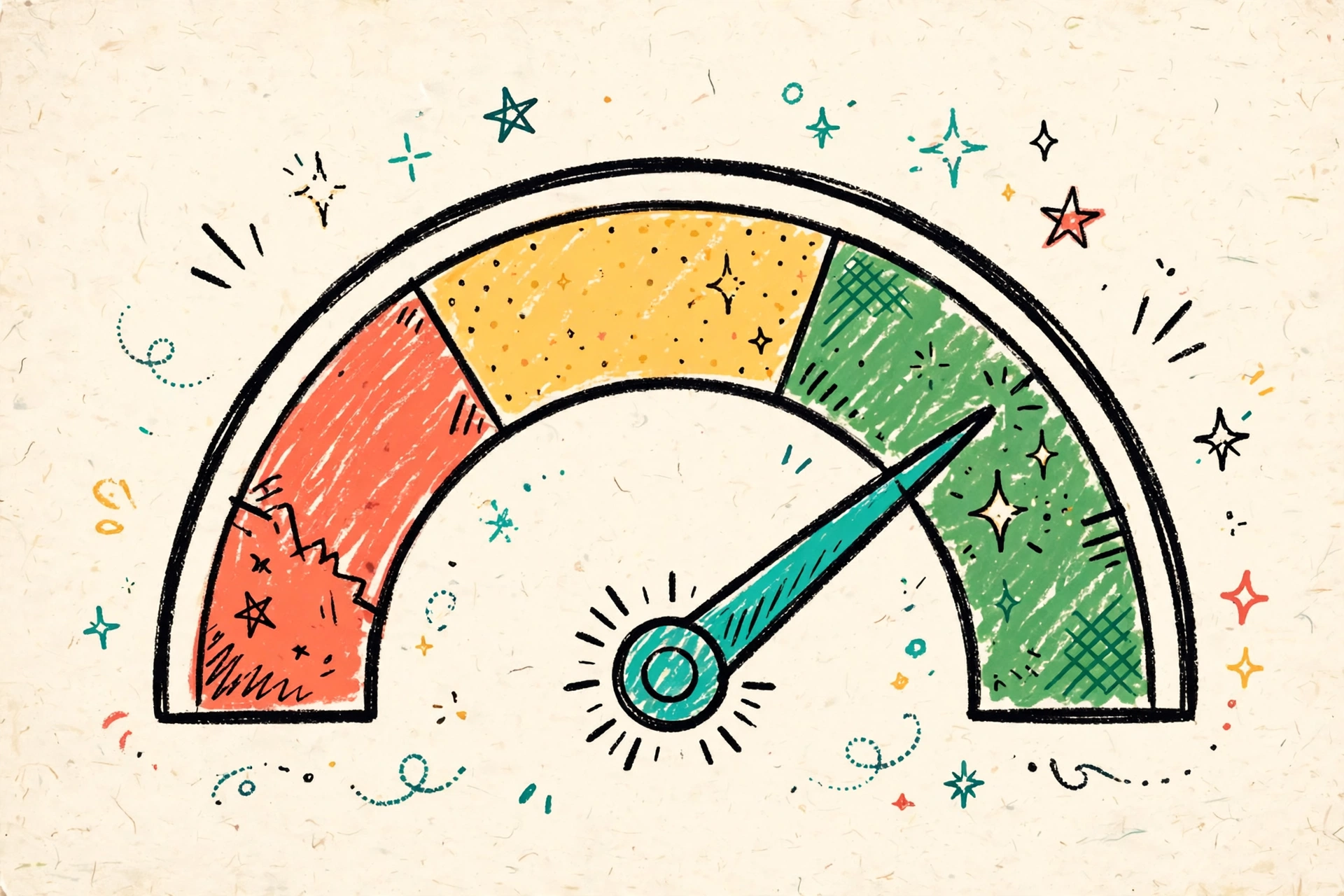
- 800–850: Exceptional. You’ll generally qualify for the best rates and terms available.
- 740–799: Very good. Most lenders will offer you favorable terms; this is roughly where “excellent” rates kick in for many products.
- 670–739: Good. The median range. You’ll be approved for most credit products, though not always at the lowest advertised rates.
- 580–669: Fair. You can still get credit, but expect higher interest rates and lower limits.
- Below 580: Poor. Approval gets difficult, and when you are approved, the terms are expensive.
Note that there are other scoring models (VantageScore, for example, which also uses a 300–850 scale), and your score can differ slightly between the three credit bureaus — Equifax, Experian, and TransUnion — because they don’t all hold identical data. A small spread between bureaus is normal and nothing to worry about.
The 5 Factors That Make Up Your Score
FICO publishes the general weights of the five ingredients in your score. Understanding these weights is the whole game, because it tells you exactly where to focus your effort.
1. Payment History — 35%
The single biggest factor, by far. Have you paid your bills on time? A single payment that’s 30 days late can drop a good score by 60–100 points or more, and the mark stays on your report for seven years. The good news: as it ages, the damage fades.
Practical takeaway: set up autopay for at least the minimum payment on every account. You can always pay more manually, but autopay guarantees you’re never late by accident. One late payment does more damage than almost anything else on this list.
2. Amounts Owed (Credit Utilization) — 30%
This is the ratio of your credit card balances to your credit limits. Owe $2,000 on cards with $10,000 in total limits, and your utilization is 20%. The common guidance: keep it under 30%, and under 10% is even better for your score.
Here’s what surprises people: utilization has no memory in most FICO models. It’s a snapshot. If your utilization spikes one month, your score dips; pay it down the next month, and your score bounces back. That makes it the fastest lever you can pull — people see score changes within a billing cycle or two.
A useful trick: if you can’t pay a balance down quickly, requesting a credit limit increase (without increasing your spending) lowers your utilization ratio instantly. Just don’t treat the higher limit as permission to spend more.
3. Length of Credit History — 15%
This considers the age of your oldest account, your newest account, and the average age of all your accounts. Longer is better, which is why you should think twice before closing your oldest credit card — even if you never use it, it anchors your history.
This factor also explains why young adults start with thin files: there’s no shortcut to time. If you’re just starting out, a secured card or becoming an authorized user on a family member’s long-standing, well-managed account can help you begin building history.
4. New Credit — 10%
Opening several new accounts in a short period suggests to lenders that you might be in financial trouble, so it dings your score slightly. Each application also triggers a “hard inquiry,” which typically costs you a few points for about a year.
Don’t panic about rate shopping, though: FICO treats multiple mortgage, auto, or student loan inquiries within a short window (typically 14–45 days, depending on the model) as a single inquiry, precisely so you can shop for the best rate without being penalized.
5. Credit Mix — 10%
Lenders like to see that you can handle different kinds of credit — revolving (credit cards) and installment (auto loans, mortgages, student loans). But this is the smallest factor, and you should never take out a loan just to improve your mix. If your only credit is a card you manage perfectly, that’s fine.
How to Check Your Credit Score for Free
You have more free options than most people realize:
- AnnualCreditReport.com — the only federally authorized source for your free credit reports from all three bureaus. You’re entitled to check them regularly; review the full reports at least once a year for errors or unfamiliar accounts.
- Your bank or credit card issuer — many now show you a free FICO or VantageScore in your online dashboard, updated monthly.
- Credit bureaus directly — Experian, for example, offers a free score and report tier.
Checking your own score is a “soft inquiry” and never hurts your score. That’s a myth worth killing permanently: you can check your score every day if you want. Only applications for new credit create hard inquiries.
When you review your reports, look for errors — wrong balances, accounts you don’t recognize, payments marked late that weren’t. Disputing errors with the bureau is free, and cleaning up a mistake can meaningfully lift your score. Identity theft often shows up on credit reports first, so this habit doubles as fraud protection.
Credit Score Myths Worth Forgetting
- “Carrying a balance helps your score.” No. Paying in full every month is just as good for your score and saves you interest. Lenders see that you use credit; they don’t need you to pay for the privilege.
- “Closing a card helps.” Usually the opposite — it reduces your total available credit (raising utilization) and eventually shortens your history. Keep old, no-fee cards open with an occasional small charge.
- “My income affects my score.” It doesn’t. Your score is built from credit behavior only. A millionaire with late payments scores worse than a barista who pays on time.
- “Checking my score lowers it.” Only hard inquiries from applications count. Your own checks are invisible to scoring.
- “There’s one true score.” There are dozens of FICO versions and VantageScore models, and each bureau’s data differs slightly. Don’t chase a single number — watch the trend and the range.
The Fastest Realistic Ways to Improve
If your score needs work, here’s the honest priority order — no gimmicks:
- Stop the bleeding: bring any past-due accounts current and set up autopay. Payment history is 35% of the score.
- Attack utilization: pay down card balances, starting with the highest-utilization card. This is the fastest-moving factor.
- Don’t open new accounts while you’re rebuilding, unless it’s a secured card to establish history.
- Dispute errors on your reports — free, and sometimes worth dozens of points.
- Be patient. Negative marks fade with time, and consistent on-time payments are the most powerful long-term builder there is.
Your score connects directly to the rest of your money life. High card balances drag your score down through utilization — and those same balances are costing you dearly in interest, which is why it’s worth understanding how credit card interest actually works. And once your debts are under control, a solid budget keeps you from sliding backward.
FAQ
What is a good credit score to buy a house?
Conventional mortgages generally want to see at least 620, and the best rates typically start around 740. FHA loans can go lower — sometimes into the 500s with a larger down payment. But your score is only part of the mortgage picture; lenders also weigh your income, debts, down payment, and employment history.
How long does it take to build credit from scratch?
You can generate your first FICO score about six months after opening your first credit account. Getting into the “good” range (670+) typically takes 1–2 years of consistent on-time payments and low utilization. There’s no way to rush the length-of-history factor — time is literally part of the formula.
Does paying off a collection account remove it from my report?
Paying it off updates its status to “paid,” but the collection itself generally stays on your report for seven years from the original delinquency date. That said, newer scoring models (FICO 9, VantageScore 3.0 and 4.0) ignore paid collections entirely — so whether it helps your score depends on which model the lender uses. Before paying an old collection, it’s worth understanding the statute of limitations on the debt in your state.
Will freezing my credit hurt my score?
No. A credit freeze — which blocks new creditors from accessing your report — has zero effect on your score. It’s one of the best free identity-theft protections available, and you can temporarily lift it whenever you need to apply for credit. Given how often data breaches happen, freezing all three bureaus is just sensible hygiene.
DotWealthy is for education only, not financial advice. Everyone’s situation is different — consider talking to a qualified financial professional before making big money decisions.