
Zero-Based Budgeting: Give Every Dollar a Job
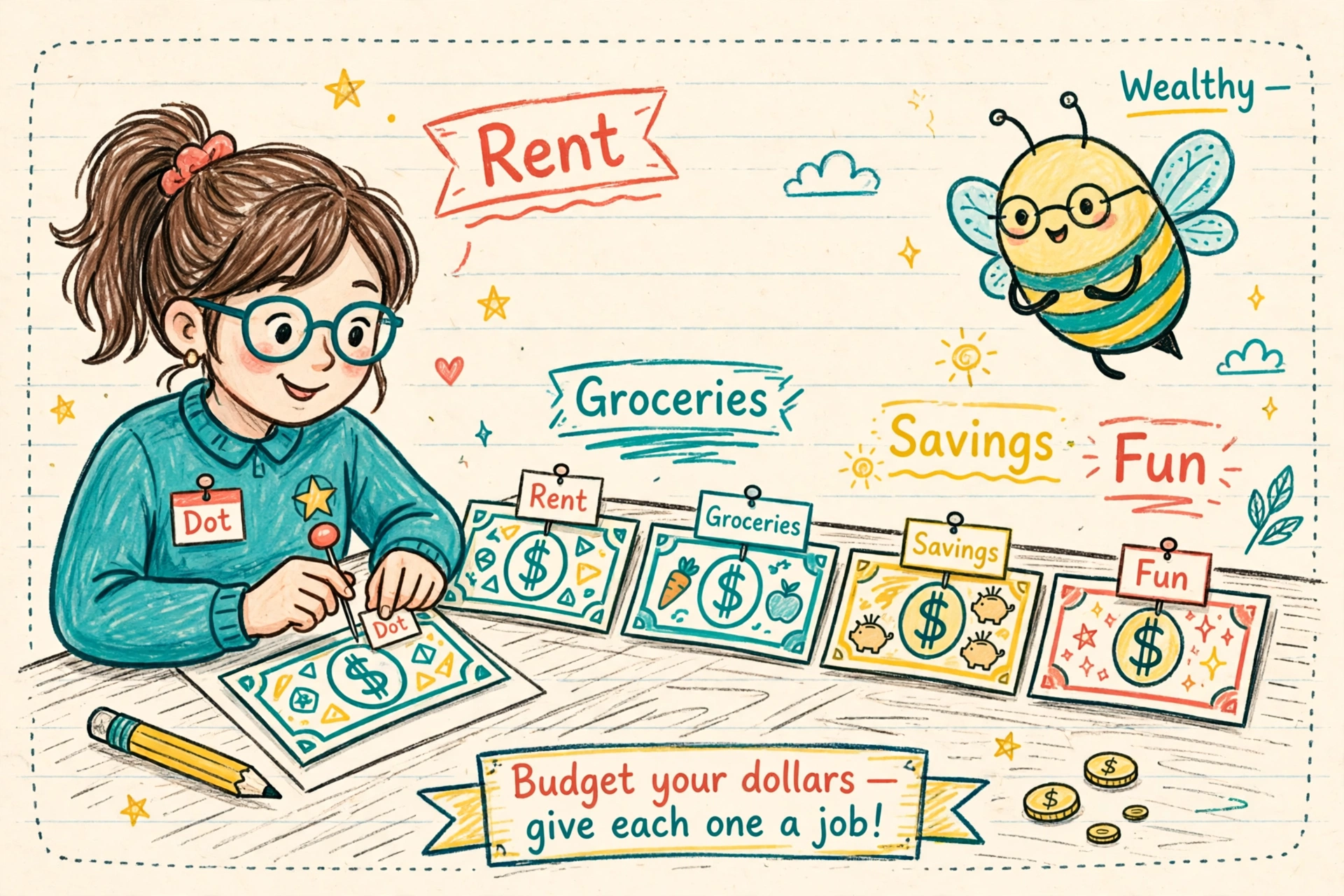
Zero-based budgeting means you assign every dollar of your take-home pay a specific job before the month starts, so income minus planned spending equals zero. Nothing is left floating. Rent gets a number. Groceries get a number. Savings gets a number too — and yes, snacks count.
The money that vanishes isn’t spent. It’s unassigned.
Dot stared at her banking app one Sunday night. “I made decent money this month,” she said. “So where did it go?”
Wealthy didn’t even look up. “It went wherever it wanted. You never told it where to go.”
That’s the whole problem this method fixes. Most budgets track what already happened. You look back, you wince, you promise to do better. A zero-based budget flips the order. You decide first, on paper, before a single dollar moves. Then the month is just you following your own instructions.
No, zero doesn’t mean broke. That’s the first misunderstanding, and it scares people off. Zero means planned. Every dollar has a name tag.
How the math actually works
The equation fits on a sticky note:
Take-home pay − every planned category = 0
Say your paychecks add up to $3,850 a month after tax. You’d sit down and hand out all $3,850, like this:
| Job for the dollar | Amount |
|---|---|
| Rent | $1,350 |
| Utilities and phone | $210 |
| Groceries | $520 |
| Car insurance and gas | $310 |
| Minimum debt payments | $260 |
| Eating out | $180 |
| Subscriptions | $45 |
| Personal and fun money | $150 |
| Emergency fund | $400 |
| Sinking funds for irregular bills | $175 |
| Extra debt payment | $250 |
Add it up. $3,850 out, $3,850 assigned. Zero left over, and yet $650 went to savings and extra debt payoff. See the trick? “Left over” money rarely survives the month. Assigned money does.
Your numbers won’t look like this table. They shouldn’t. Your rent is your rent. The point is the habit: if a dollar shows up in your account, it gets a job in the plan.
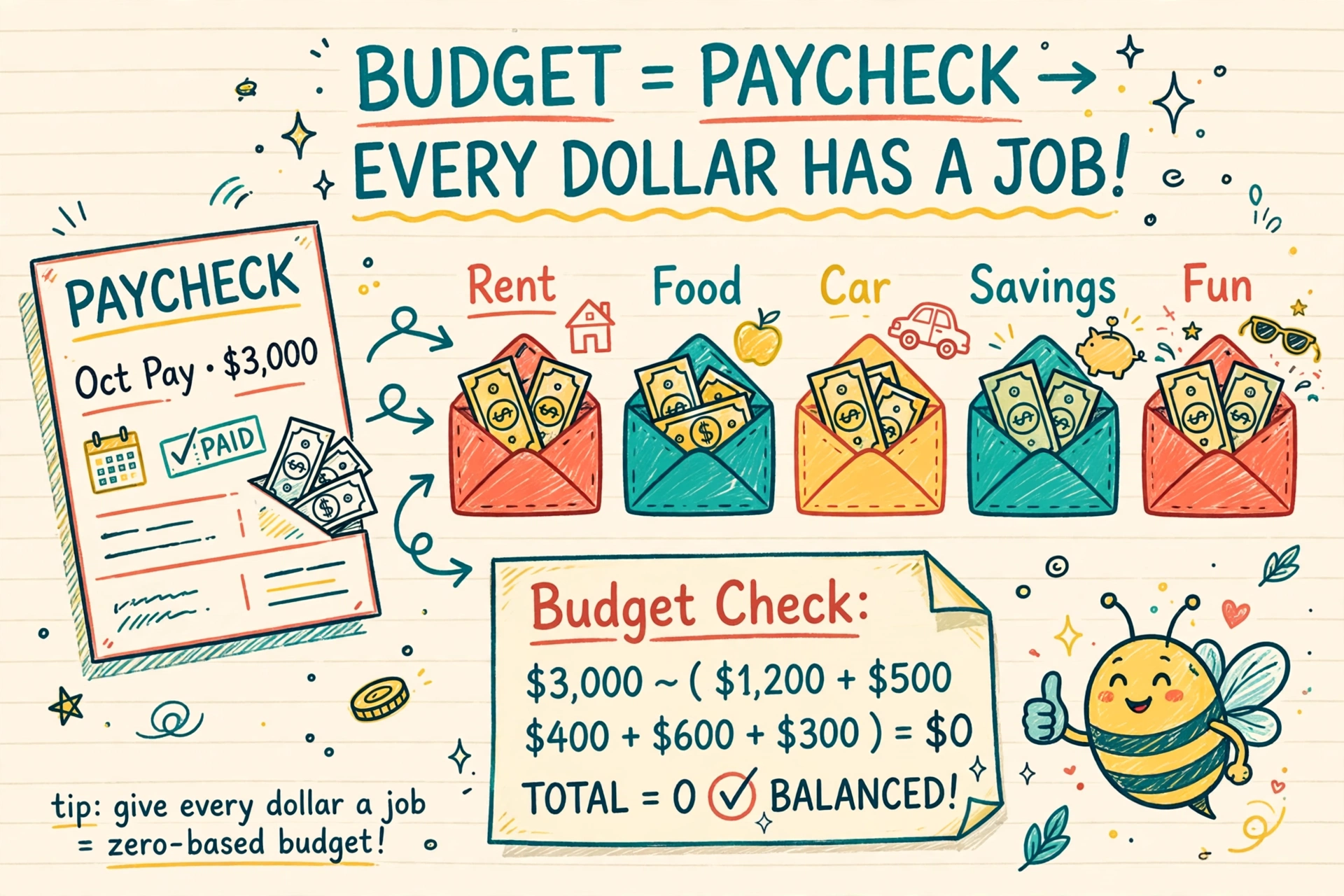
Build your first one in five steps
1. Write down what actually lands in your account
Not your salary. Your take-home. The number that hits checking after tax and payroll deductions. If you’re paid every two weeks, some months bring three paychecks — plan those months on two, and treat the third as a bonus assignment session for savings or debt.
Income jumps around? Use your lowest recent month as the base. Anything extra gets assigned when it arrives, not before.
2. List every place money goes
Open last month’s bank statement. All of it. People forget the sneaky ones: the annual software renewal, the oil change, the birthday gift, the haircut. Write down the bills, the basics, and the fun stuff. Guilt doesn’t help here. Honesty does.
3. Give savings a line near the top
Here’s where most people blow it. They assign everything else first, then save “whatever’s left.” Spoiler: nothing’s left. Put the emergency fund and any sinking funds up with the bills, like they’re owed to someone. They are. Future you is someone.
4. Keep handing out dollars until you hit zero
First pass too high? Trim the flexible stuff — eating out, fun money, subscriptions. First pass too low, with $200 unassigned? Don’t leave it floating. Send it somewhere on purpose. Extra debt payment. A weekend trip fund. Anything with a name.
5. Track as you go, and move money when life moves
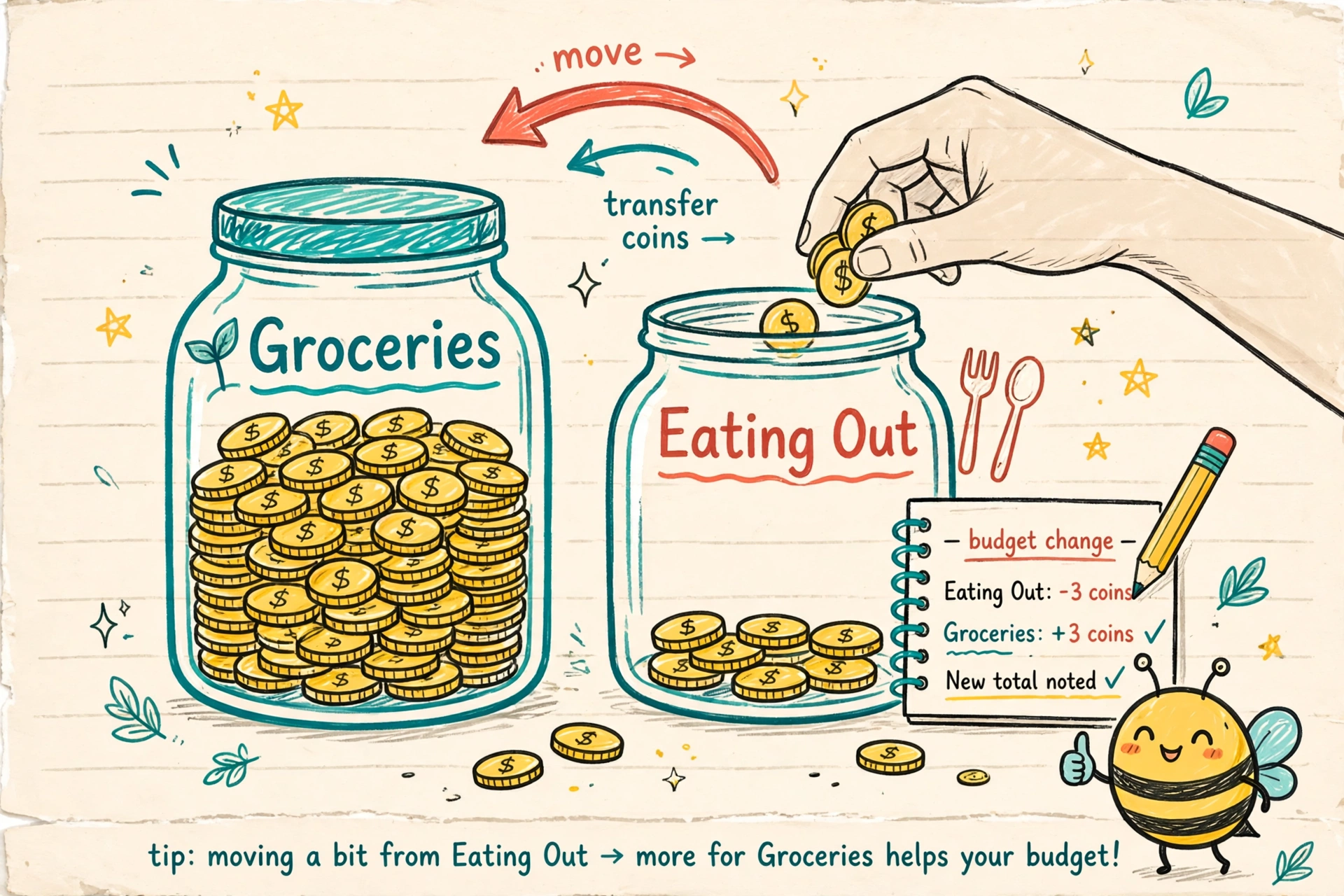
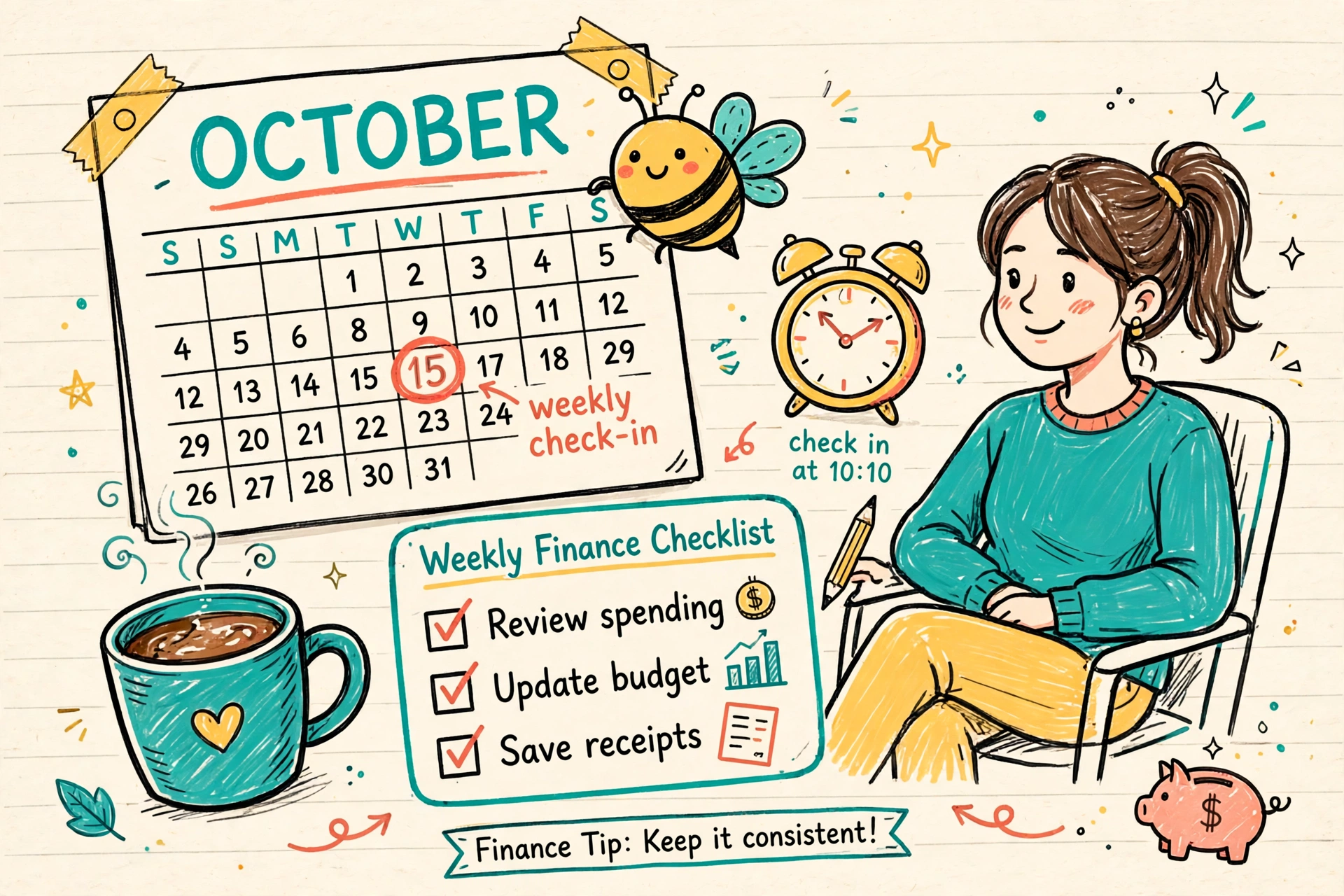
A plan you never look at is just a wish with formatting. Check in once a week. Ten minutes. Groceries running hot? Move $40 from eating out to groceries and write it down. That’s not failure. That’s the system working. The total still lands on zero — the jobs just got swapped.
Paid every two weeks? Run it per paycheck
Monthly planning feels abstract when money lands twice a month. Fine — shrink the window. Each paycheck gets its own mini-plan. Paycheck one covers rent, the car payment, and half the grocery money. Paycheck two covers insurance, utilities, and the rest.
The rule doesn’t change. Every dollar from that check gets named before you spend it. Some people honestly find the paycheck version easier, because the numbers are smaller and the feedback comes faster. Try whichever rhythm you’ll actually stick with. Consistency beats elegance here, every single time.
Run your own numbers
Want to see what your take-home pay looks like split into needs, wants, and savings? Try the free budget calculator below and use its split as a starting draft for your own zero-based plan.
Where people get stuck
The irregular bill ambush. Car registration shows up once a year and wrecks a perfectly good month. The fix is boring and it works: divide the yearly cost by 12, assign that slice every month, and let it pile up in a sinking fund until the bill arrives.
The fun money guilt trip. Some folks build a plan so strict it could pass a military inspection. Then Friday comes, they buy a pizza, and the whole thing feels broken. Budget the pizza. A plan with zero fun in it has a short life expectancy.
The perfect-month fantasy. Your first plan will be wrong. Groceries will cost more than you guessed. The dog will eat something weird and need a vet. Adjust the numbers next month and keep going. A rough plan you follow beats a perfect plan you abandon by the 15th.
Zero-based or 50/30/20? You don’t have to pick a team
The 50/30/20 rule splits your pay into rough buckets — needs, wants, savings. It’s a great sanity check. Zero-based budgeting goes one layer deeper and names every dollar inside those buckets.
Plenty of people use both. Run the 50/30/20 split first to see if your big picture is lopsided. Then go zero-based to run the actual month. One tells you the shape. The other tells you the steps.
Dot tried it for one month, by the way. Her verdict? “Annoying for the first week. Then weirdly calm.” The Sunday-night mystery was gone. Not because she earned more — because she finally knew.
Your first month, kept simple
Don’t build a 40-category masterpiece on day one. Start ugly:
- One page. Twelve to fifteen categories, tops.
- Assign the bills first, then savings, then the flexible stuff.
- Leave a small “oops” category — $50 or so — for the thing you forgot. You forgot something. Everyone does.
- Check in weekly and move money in writing, not in your head.
- At month’s end, spend five minutes asking what surprised you, and fix that line next month.
That’s it. No app required, no color-coded spreadsheet required. Paper works. A notes app works. The tool matters far less than the ten minutes a week you spend actually looking.
Questions people ask about zero-based budgeting
Does zero-based budgeting mean spending all my money?
No. It means planning all your money. Savings, debt payoff, and investing contributions are assignments too. If your plan sends $500 to an emergency fund, that $500 is spoken for — it’s doing its job by sitting there.
What if my income changes every month?
Build the plan on your lowest typical month and cover the must-pay bills first. When a bigger paycheck lands, hold a quick assignment session for the extra: savings, debt, or a category that’s been running thin. Some people rebuild the plan with every paycheck instead of every month. That works too.
What happens when I overspend in one category?
You cover it from another category and note the move. Overspent on groceries by $35? Eating out gives up $35. The month still balances, and you learn which line was unrealistic. What you don’t do is shrug and let the total drift — that’s the old system creeping back in.
How is this different from a regular budget?
A regular budget often sets loose limits and checks the damage later. A zero-based budget assigns the full amount of your income up front, so there is no unplanned remainder quietly leaking away. The difference sounds small. In practice, it’s the difference between watching your money and directing it.
For education only, not financial advice.
This article was created with AI assistance and reviewed by our editorial team before publishing.