
Pay Yourself First: The One Habit That Builds Savings
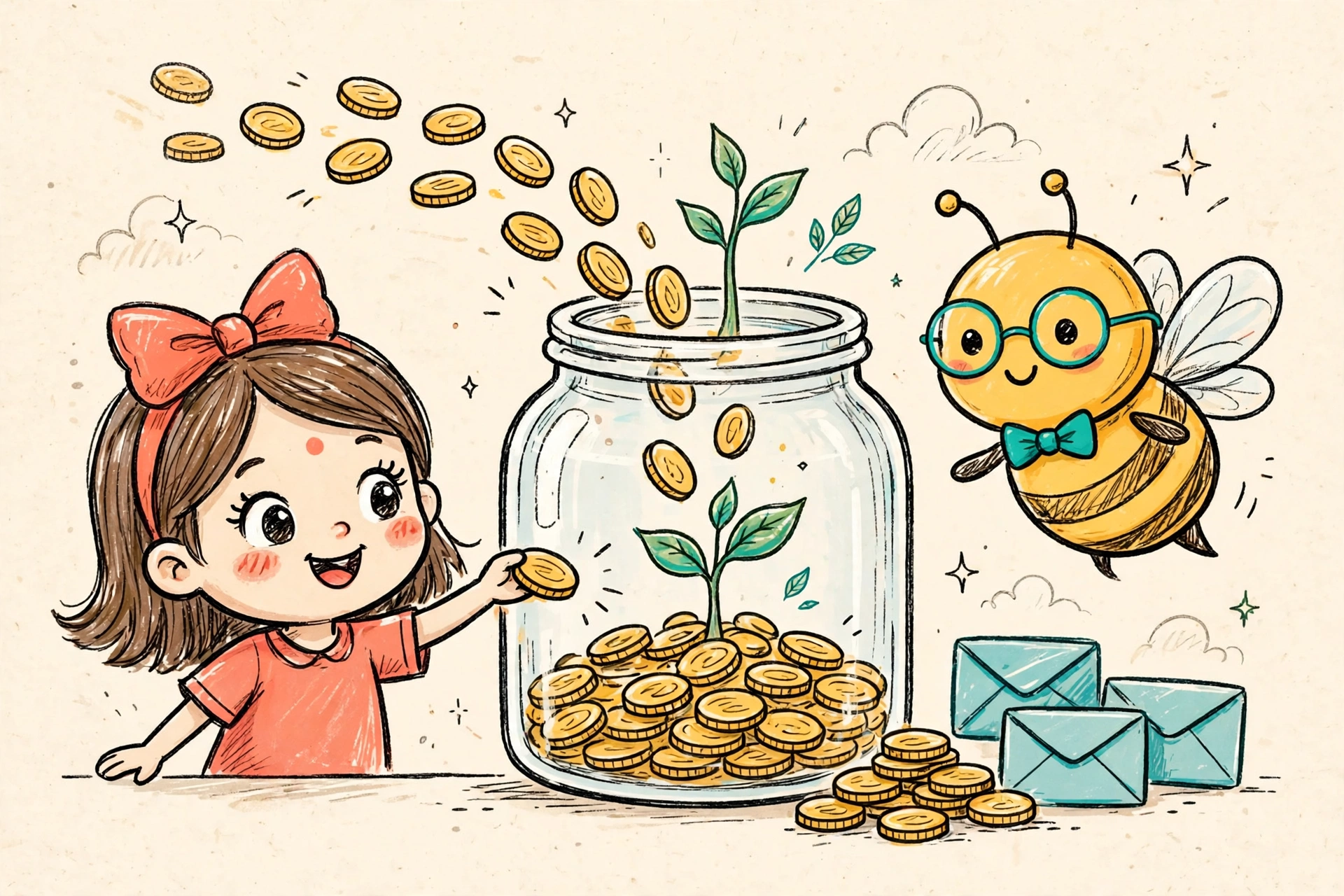
“Pay yourself first” means moving money into savings the moment you are paid — before bills, before spending, before you can talk yourself out of it. It reverses the usual order, where savings gets whatever is left at the end of the month. The awkward truth the phrase exposes: for most people, what is left at the end of the month is nothing.
Why the usual order fails
The standard approach is not lazy, it is just badly sequenced. Income arrives, life happens for four weeks, and saving is scheduled last — funded by leftovers from a month that included a car repair, two birthdays and a sale you could not resist. Behavioural economists have a dry name for it, but you already know the mechanism: spending expands to meet the money visible in the account.
Paying yourself first is not really a budgeting technique. It is a plumbing fix. Money that leaves on payday is never sitting there looking spendable, and most people adapt to the slightly smaller balance within a cycle or two — the same way you adapted the last time your rent went up.
How to set it up in an afternoon
Pick an amount you could survive without — even $25 or $50 a paycheck counts at the start. Open a separate savings account if you do not have one; separate matters, because money mixed with spending money gets spent. Then set an automatic transfer for the day after payday, or use your employer’s split-deposit feature if it offers one, sending the amount straight to savings before it ever reaches your main account.
That is the whole system. Its power is that it asks for one decision instead of thirty days of daily discipline. Wills fail; standing instructions do not get tired.
How much should the “first payment” be?
Rules of thumb like saving 20% of take-home pay exist, and they are fine as a compass. But the right starting number is the largest one that does not bounce a bill. If money is tight, start embarrassingly small — the habit is the asset in the first months, not the amount. Then raise the transfer by 1% of pay every few months, or every time your income rises. Increases timed to raises are nearly painless: your lifestyle never saw the money, so it never misses it.
Stack the payments in a sensible order, too. First build a small starter buffer (enough to cover a typical emergency without a credit card), keep any employer retirement match fully funded, then push extra toward high-interest debt or a full emergency fund, depending on your situation.
See what your payday transfer becomes
Set a goal below — an emergency fund target, a deposit, whatever you are aiming at — and enter the monthly amount your payday transfer could manage. The answer is the number of months standing between you and done.
Most people are surprised in the good direction: modest transfers finish sooner than gut feeling suggests, especially once a raise or two gets folded in.
The two ways people break it
The first is raiding. A savings account that funds holidays and sales is not savings, it is delayed spending with extra steps. Name the account for its job — “Emergency fund” beats “Savings 2” — and make yourself transfer money back deliberately, never by default.
The second is setting the amount by optimism instead of arithmetic, overdrawing twice, and cancelling the transfer in a huff. If that has been your pattern, halve the amount and restart. A small transfer that survives the year quietly outperforms the heroic one that died in February.
A worked example on an ordinary salary
Say take-home pay is $3,200 a month, in two $1,600 checks. A $100 transfer leaves with each check — $200 a month, about 6% of pay. Nothing dramatic. But it never gets spent in a tired moment at the end of the month, so after a year it is $2,400 plus a trickle of interest, which covers the average car repair, the average vet emergency, or a modest deposit top-up. After two years of small raises folded in — $120 a check, then $140 — the buffer crosses $5,000.
Compare the twin who saved “whatever was left”: in good months $150, in real months zero, averaging perhaps $40. Same income, same intentions, wildly different balances — purely because one version of saving was scheduled first and the other was scheduled last. That gap, repeated over a working life and eventually invested, is the whole idea in one paragraph.
Frequently asked questions
Should I pay myself first even while I have credit card debt?
Usually, a small amount — yes. Without any buffer, the next surprise expense goes straight back onto the card and the debt becomes a treadmill. Build a modest starter fund while paying the card down, then redirect aggressively to the debt.
What if my income changes every month?
Make the transfer a percentage instead of a fixed amount if your bank allows it, or set the fixed transfer from your lowest typical month and sweep any extra into savings manually in good months.
Where should the money go — savings account or investing?
Short-term goals and emergency funds belong in a savings account, ideally a high-yield one, where the value cannot drop the week you need it. Money for goals a decade away can reasonably be invested. The order matters: buffer first, investing second.
Does paying myself first replace a budget?
It replaces the part of budgeting most people fail at. You still need to know your fixed bills fit inside what’s left, but many people find the automatic transfer plus a rough eye on spending works better than tracking every category.
How is this different from the 50/30/20 rule?
The 50/30/20 rule describes the shape of a finished budget; pay yourself first is the mechanism that makes the savings slice actually happen. They pair well — the rule sets the target, the payday transfer enforces it.
Dot Wealthy is an education site, not a financial adviser. Adapt the amounts and order to your own bills and debts, and talk to a qualified professional before making big money decisions.
This article was created with AI assistance and reviewed by our editorial team before publishing.