
How to Fill Out Form W-4 Without Guessing
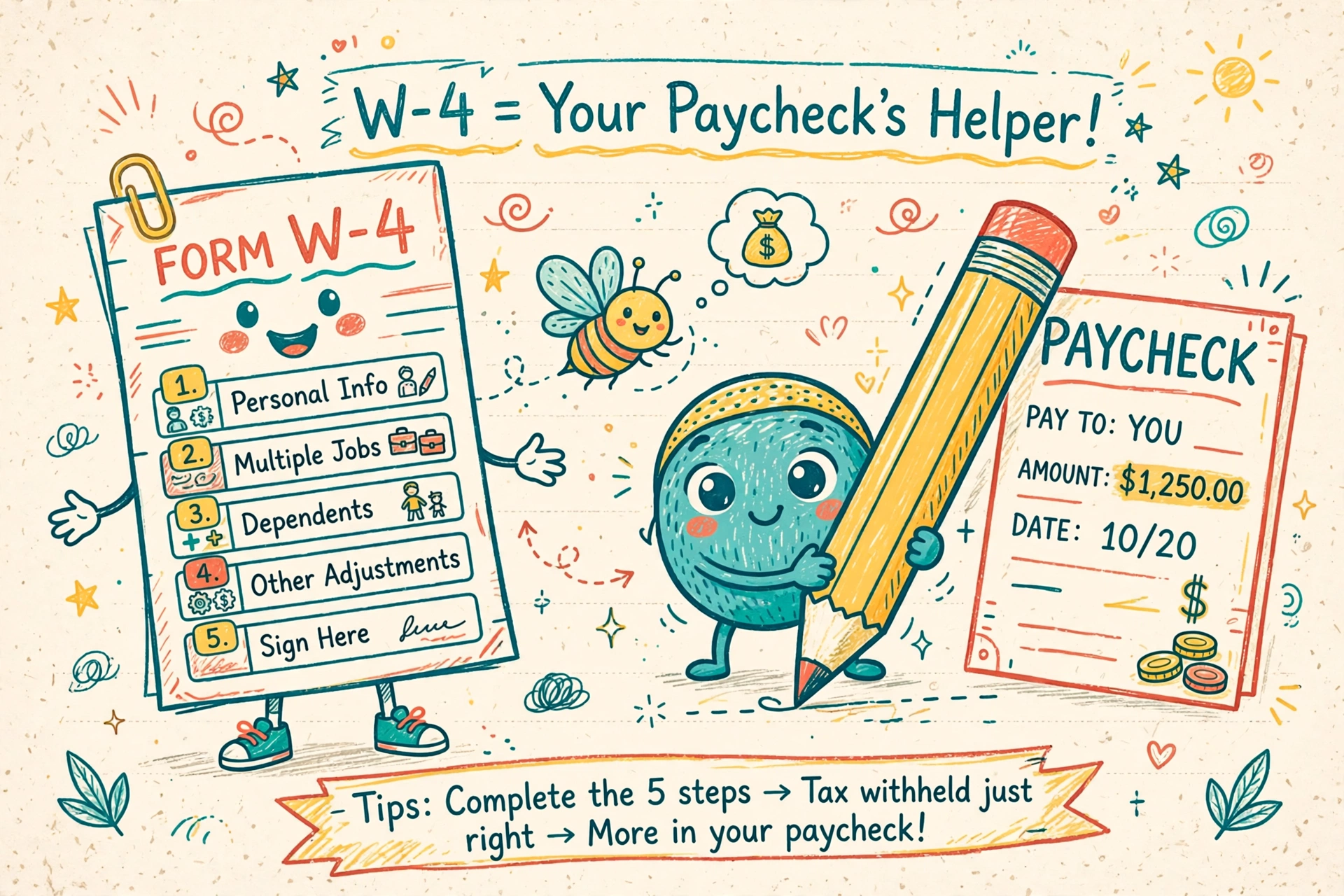
Form W-4 tells your employer how much federal income tax to take out of each paycheck. Fill out Step 1, add Step 2 if you or your spouse hold a second job, Step 3 for dependents, Step 4 for extra income or extra withholding, then sign Step 5. Done right, April holds no surprises.
A big refund isn’t a bonus. It’s a pay cut you reversed.
Plenty of people cheer when a fat refund lands. Wealthy doesn’t. “That was your money,” he says. “You just lent it out, interest-free, one paycheck at a time.” He’s right. A refund means too much came out all year. A surprise bill means too little did. Your W-4 is the dial between those two outcomes.
Here’s the part nobody tells new hires: you don’t fill this form out once and forget it forever. You filled it out for the life you had then. Got married? Had a kid? Picked up weekend work? The form on file still describes the old you, and payroll keeps following it until you hand in a new one.
Good news, though. The current form is short. According to the IRS, Form W-4 has five steps, and plenty of people only need two of them. The rest exist for specific situations.
Step 1: your name, your status, no tricks
Step 1 asks for your name, address, Social Security number, and filing status. That’s it. Single or married filing separately, married filing jointly, or head of household — pick the one you’ll actually use on your tax return.
Don’t get cute here. Head of household isn’t a prize for paying the rent; it has its own rules about who lives with you and who you support. Unsure which box fits? The status on last year’s return is a solid starting point, as long as your life hasn’t changed since.
If you never hand in a W-4 at all, your employer doesn’t shrug and skip the tax. According to IRS guidance, payroll withholds as if you were single with no other adjustments. For a lot of households, that means too much comes out.
Step 2: the two-job trap
This step causes more surprise bills than every other step combined. Here’s why. Each employer withholds tax as if its paycheck were your only income. Neither boss knows about the other one.
Say you earn similar pay at two jobs. Each job, on its own, sits in a modest tax bracket, so each one withholds modestly. Put the two incomes together on one return, though, and part of your earnings lands in a higher bracket. Nobody withheld for that part. April notices, even if you didn’t.
The same trap springs on married couples who both work. Dot calls it “the double hello” — both jobs greet your money like it’s the only money in the house. The IRS disagrees.
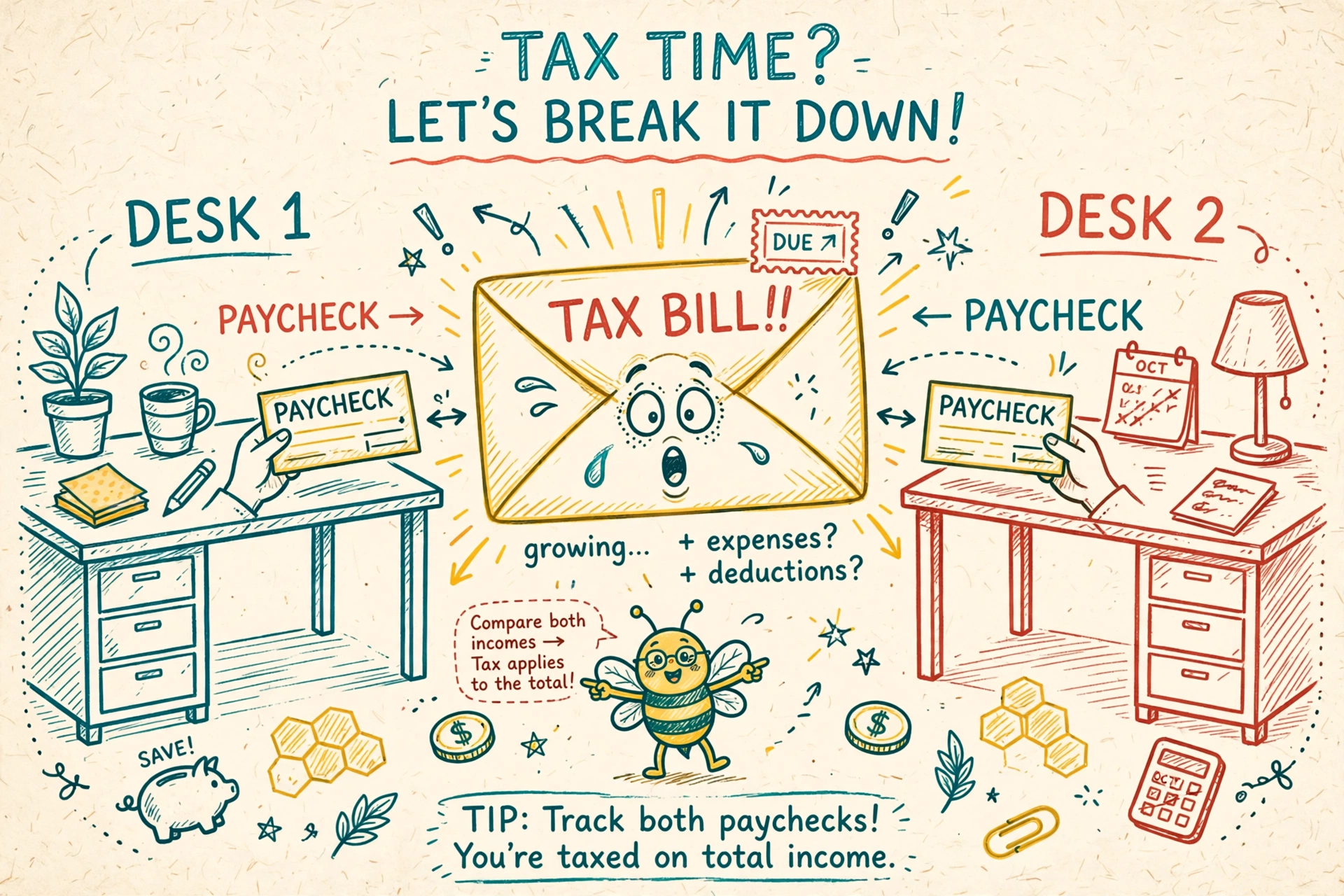
Step 2 gives you three ways to fix it, per the IRS instructions on the form itself:
- Use the IRS Tax Withholding Estimator. The most accurate option, and the one the IRS points people with more than two jobs straight to.
- Use the Multiple Jobs Worksheet printed with the form. Paper, pencil, a few minutes.
- Check the box in Step 2(c). Quick and simple, but the form limits this shortcut to households with exactly two jobs at roughly similar pay. Both spouses check it, or you check it on both of your jobs.
One rule that saves headaches: do the fancy math on the W-4 for the highest-paying job only. The other job’s form gets Steps 1 and 5, and nothing else. Split your adjustments across two forms and you’ll double-count them.
Step 3: kids and dependents shrink the withholding
Step 3 is where dependents enter the picture. If your total income is $200,000 or less — or $400,000 or less if you’re married filing jointly — the IRS Form W-4 instructions tell you to multiply each qualifying child under 17 by $2,200, and each other dependent by $500, then add the two numbers together. That total goes on the form, and payroll withholds less because your final tax bill will be smaller.
Read that again, because people misread it constantly. You’re not writing down how many kids you have. You’re writing down a dollar amount. Two young kids? That’s $4,400 on the line, using the IRS figures above, plus $500 more if, say, a parent or an older teen counts as your dependent.
Married and filing jointly? Only one spouse fills in Step 3. Both of you claiming the same kids on two forms means too little gets withheld twice over. Pick the higher-paying job’s form and put the full amount there. You can also add estimates of other tax credits you expect to claim — most people skip that part, and that’s fine.
Step 4: three small lines that do the fine-tuning
Step 4 is optional, all three lines of it. Ignore it and nothing breaks. Use it well and you can fix almost any withholding problem without touching the rest of the form.
Line 4(a), other income. Got money coming in that nobody withholds on — interest, dividends, a rental, retirement income? Add up roughly what you expect for the year and write it here. You’ll cover tax on that side income through your paycheck instead of a bill.
Line 4(b), deductions. For people who itemize, or who have deductions well beyond the standard one. The form includes a Deductions Worksheet for the math. Take the standard deduction like most filers do? Leave this blank.
Line 4(c), extra withholding. The blunt instrument, and honestly? Sometimes blunt is perfect. Pick a flat dollar amount and it comes out of every paycheck, on top of everything else. Side gig income you can’t predict? A spouse whose pay jumps around with commissions? A rough year last April that you never want to repeat? This line is how you buy peace of mind.
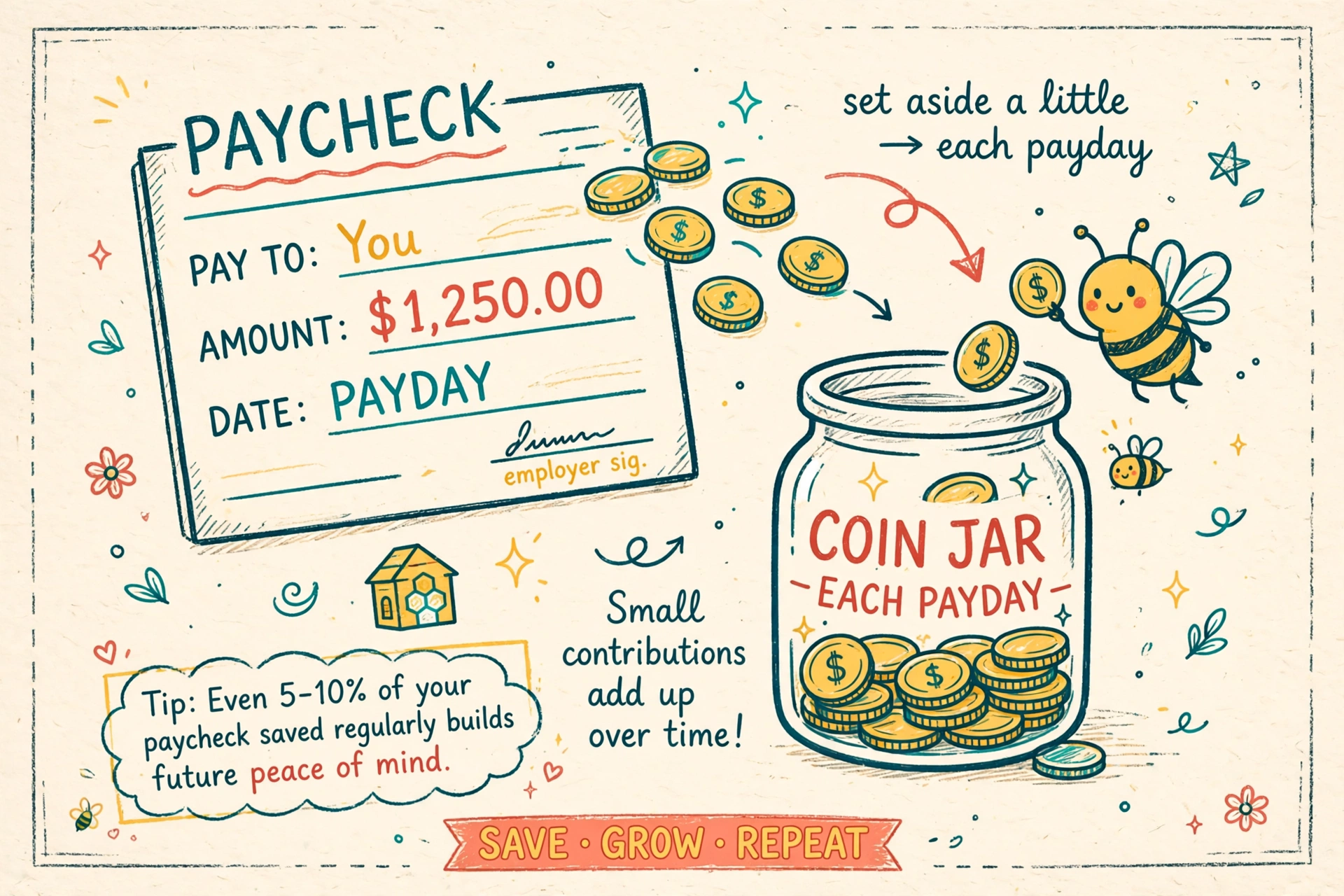
The math is friendly, too. An extra $40 per paycheck on a biweekly schedule adds up to $1,040 over a year of 26 paydays. That’s just multiplication, not a promise — but it shows how a number that barely stings per paycheck can quietly erase a four-figure tax bill.
Step 5: sign it, hand it in, then check your stub
Step 5 is your signature and the date. No signature, no valid form. It goes to your employer — payroll or HR — never to the IRS. Keep a copy for yourself.
Then do the step that isn’t printed anywhere on the form: look at your next pay stub. Did the federal withholding actually change? Forms get filed, emails get buried, payroll systems glitch. Two minutes comparing stubs catches all of it. Wealthy’s rule: “Trust the form, but verify the stub.”
See what a change does to your take-home pay
Run your salary through this take-home pay calculator to see how withholding and other paycheck deductions shape the number that actually hits your bank account.
When should you hand in a fresh W-4?
You don’t need permission, a new job, or a special season. You can submit a new W-4 to your employer whenever your life shifts. These are the moments that matter most:
- You got married or divorced, and your filing status changed.
- A child was born, adopted, or grew out of dependent status.
- You or your spouse started, or stopped, a second job.
- Your pay jumped — a raise, a promotion, a switch to a much better-paying job.
- You owed a lot last April, or got a refund so big it stung a little.
- You started earning real side income that nobody withholds on.
Dot’s habit is worth copying: she glances at her withholding every January, right after her first paycheck of the year. Ten minutes. Once a year. That’s the whole system.
Three mistakes behind most surprise bills
- Skipping Step 2 with two incomes in the house. Each employer withholds like it’s the only job. It isn’t. This one mistake, repeated quietly all year, is the classic April ambush.
- Writing “exempt” when you aren’t. Claiming exempt means zero federal income tax withheld, and the IRS limits that status to people who owed no federal tax last year and expect to owe none this year. Writing it just to boost a paycheck turns into a bill, plus possible penalties.
- Forgetting the form after a big life change. A W-4 from your single, one-job, no-kids years will happily keep under-withholding for your married, two-job, two-kids life. It doesn’t update itself. You do.
Frequently asked questions
Do I have to fill out a new W-4 every year?
No. Your form stays on file and payroll keeps using it until you hand in a new one. The exception is if you claimed exempt status — that claim expires and has to be renewed each year, generally by mid-February, according to the IRS. Everyone else only needs a new form when their life or income changes.
What happened to the old allowances?
They’re gone. The IRS redesigned Form W-4 for 2020 and dropped the old allowance count, because allowances were tied to personal exemptions that tax law had suspended. If an older coworker tells you to “claim more allowances,” they’re describing a form that no longer exists.
Should I aim for a small refund or break even?
There’s no single right answer, and anyone who insists otherwise is selling something. Breaking even means your paychecks were as big as they could be all year. A small refund means you paid a little extra for peace of mind. Either is fine. Avoid the extremes — a bill you can’t pay, or a refund so large it meant tight months all year for no reason.
Can I just add extra withholding instead of doing the worksheets?
Yes, and lots of people do. Line 4(c) lets you name a flat extra amount per paycheck, no worksheet required. It won’t be as precise as the IRS Tax Withholding Estimator, but a rough fix you actually submit beats a perfect calculation you never get around to.
Does my state have its own form?
Often, yes. Many states use their own withholding certificate, and some use the federal W-4 instead. Payroll can tell you which one your state wants. The steps in this guide only control federal tax — state withholding is its own separate dial.
For education only, not financial advice. Dot Wealthy is an education site, not a tax professional. Figures cited are from IRS Form W-4 and its instructions and can change from year to year — confirm the current form at irs.gov, and talk to a qualified tax professional about your own situation.
This article was created with AI assistance and reviewed by our editorial team before publishing.