
How Does a Mortgage Work? Payments, Interest and Amortization
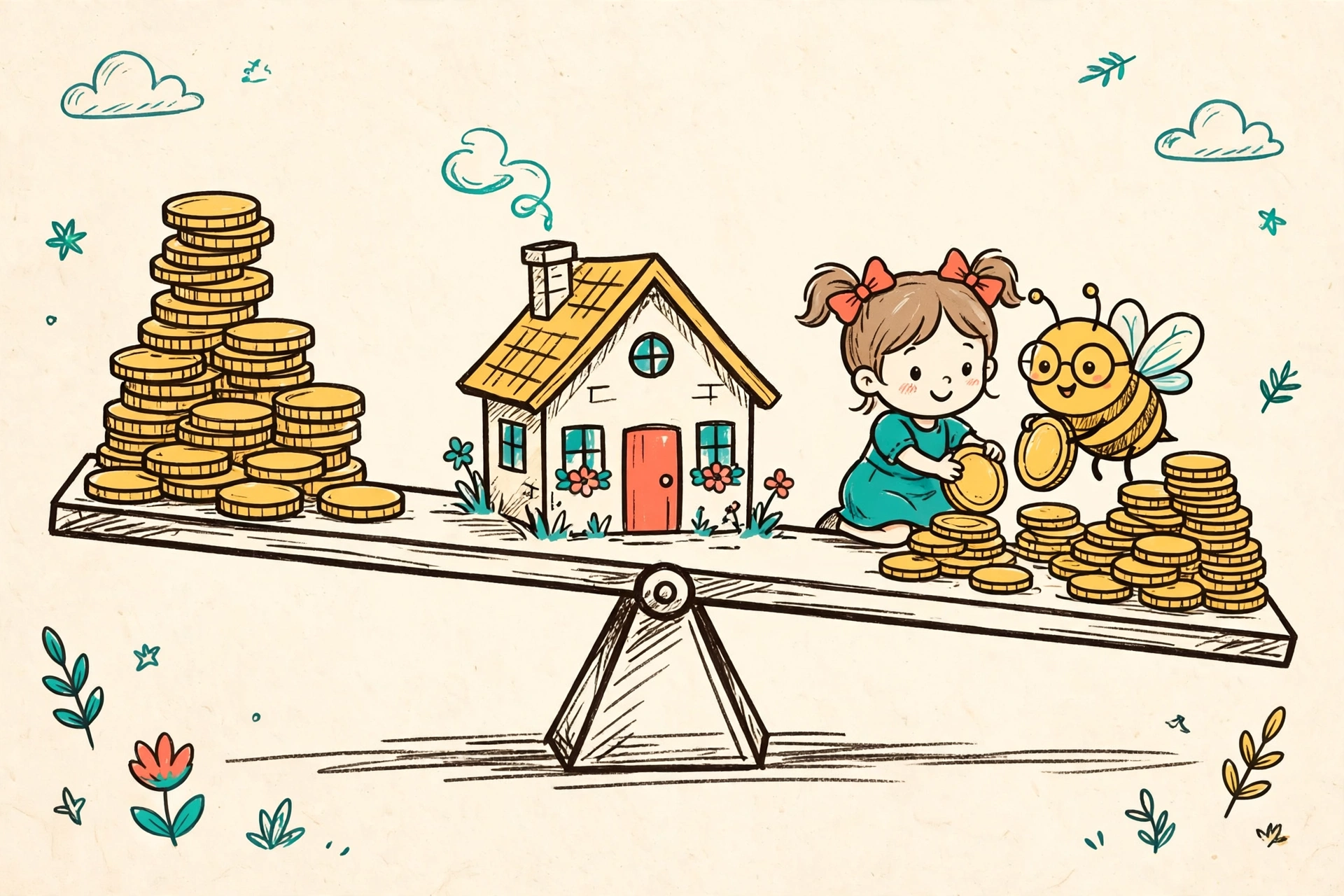
A mortgage is a loan tied to a home: you borrow a large amount, repay it in monthly payments over a long stretch — often 30 years — and the house itself is the collateral. Miss enough payments and the lender can take the property through foreclosure. That one fact, the collateral, is why mortgage rates are so much lower than credit card rates, and why the paperwork is so much thicker.
The moving parts, in one pass
Strip away the jargon and a mortgage has five pieces:
- Principal — the amount you borrowed. Buy a $350,000 home with $70,000 down and your principal starts at $280,000.
- Interest — the rent you pay on that money, set by your rate. It’s charged on whatever balance remains, which is why the early years sting.
- Term — how long you’ve got to repay. Thirty years and fifteen years are the common US choices.
- Down payment — your cash up front. Twenty percent down is the classic benchmark, mostly because it skips private mortgage insurance, but plenty of loans start at 3–5% down.
- Escrow — the side pot your lender holds for property taxes and homeowner’s insurance, topped up monthly and paid out on your behalf. It’s why your total monthly housing payment is bigger than the loan payment alone.
Dot’s summary after her first read-through: “So I’m paying the loan, plus the tax office, plus the insurer, all in one envelope?” That’s escrow, yes. One envelope, three jobs.
What the monthly payment actually covers: PITI
Lenders bundle the payment into an acronym, PITI — principal, interest, taxes, insurance. The first two shrink the loan and pay the lender. The last two sit in escrow. Add homeowner’s association dues if your neighbourhood has them, and mortgage insurance if your down payment was small, and you’ve got the true monthly cost of the house.
This is where buyers get caught out. A loan calculator says $1,770 a month, they build a budget around $1,770, and then the real bill lands closer to $2,400 once taxes and insurance climb aboard. Always ask for the full PITI figure. The loan-only number is a teaser.
Amortization: why $1,770 a month barely dents the loan at first
Amortization is the schedule that splits each payment between interest and principal. The split isn’t even. Not close.
Interest is charged on the balance you still owe, and at the start you owe nearly all of it. So in year one of a $280,000 loan at 6.5%, roughly $1,517 of each month’s principal-and-interest payment is interest and only about $253 touches the balance. Fast-forward to year twenty and the balance has fallen enough that the split has nearly flipped. Same payment. Completely different job.
Add it up and the totals surprise people. At 6.5% over 30 years, that $280,000 loan costs roughly $357,000 in interest on top of the principal — more than the house’s loan amount all over again. Stretch or shrink the term and the picture changes hard, which is exactly what the calculator below is for.
Try the numbers yourself
Change one thing at a time — the term, then the rate, then the down payment — and watch the monthly payment and the total interest move. The total interest line is the one that tends to change minds.
Run the 30-year and 15-year versions side by side. The 15-year payment is higher, obviously. The interest saved is usually the eye-opener — often well into six figures on a loan this size.
Fixed rate vs. adjustable rate
A fixed-rate mortgage keeps the same rate for the whole term. Boring, predictable, and the default choice for most buyers who plan to stay put.
An adjustable-rate mortgage, or ARM, fixes the rate for an opening stretch — five or seven years is common — then adjusts it periodically based on a market index, within caps written into the loan. ARMs usually start lower. The gamble is where rates sit when your fixed window ends. If you’ll almost certainly move or refinance before the first adjustment, an ARM can make sense. If this is your forever home, you’re betting your housing budget on future rates, and you should be honest with yourself about that.
30 years vs. 15 years: the honest trade-off
The 15-year loan builds equity fast and slashes total interest, and lenders usually price it at a lower rate too. The cost is flexibility: the required payment is much higher, and required is the word that matters in a month when your hours get cut or the roof leaks.
Plenty of people take the 30-year for the lower required payment and then pay extra principal in good months. You get most of the interest savings if you actually do it — there’s the rub — while keeping the right to fall back to the smaller payment when life happens. The mortgage doesn’t care which route you take. Your cash flow does.
The costs nobody puts in the ad
Beyond the down payment, closing costs typically run about 2–5% of the loan amount, according to Consumer Financial Protection Bureau guidance — lender fees, appraisal, title work, prepaid taxes and insurance. Some can be negotiated or offset with lender credits in exchange for a slightly higher rate.
Then there are the two gotchas. Private mortgage insurance (PMI) applies on most conventional loans with less than 20% down; it protects the lender, not you, and it adds a monthly charge until you reach enough equity to remove it. And prepaid interest — the daily interest between closing day and month’s end — shows up at the table and confuses everyone the first time. Neither is a scam. Both belong in your budget before you sign, not after.
Paying extra: the cheapest renovation you’ll ever do
Extra principal payments early in the loan punch way above their weight, because every dollar of balance you kill stops charging you interest for decades. One extra payment a year — or the same total dribbled in monthly — can shave several years off a 30-year mortgage. Just tell your servicer the extra is for principal, in writing or in the payment portal, and check the next statement to confirm it landed there. Keep your emergency fund intact while you do it, though. A paid-down house can’t buy groceries; cash can.
Frequently asked questions
How much house can I actually afford?
A common guardrail keeps total housing costs near or below 28% of gross income, and all debts below about 36% — lenders use versions of this when they underwrite. Treat it as a ceiling, not a target. The right number is the one that still lets you save, eat and sleep after the payment leaves your account.
What credit score do I need for a mortgage?
It varies by loan type. Conventional loans typically start around 620, and FHA loans can go lower with a bigger down payment, per CFPB guidance. Higher scores earn better rates — on a 30-year loan, a rate gap of half a point can mean tens of thousands in interest. Checking and tidying your credit a few months before applying pays for itself.
Does pre-approval mean I’m guaranteed the loan?
No. Pre-approval is a lender’s conditional yes based on verified documents, and sellers take it seriously for that reason. The final approval still depends on the appraisal and a last check of your finances — which is why you shouldn’t buy a car or open three store cards between pre-approval and closing.
Can I pay a mortgage off early without penalty?
Most modern US mortgages have no prepayment penalty, but check your loan documents — a few still carry one in the early years. If yours is clean, extra payments go straight to work on the balance, as long as you mark them as principal.
What happens if I miss a payment?
Late fees usually kick in after a grace period of about 15 days, and a payment 30 or more days late typically lands on your credit report. Foreclosure is a long legal process, not a next-week event — and lenders must generally wait until you’re 120 days behind before starting it. If money gets tight, call your servicer early. Forbearance and modification options exist, and they’re far easier to get before you’ve missed several payments.
Dot Wealthy is an education site, not a financial adviser. Rates, limits and program rules change — confirm current figures with lenders and at consumerfinance.gov, and talk to a qualified professional before making big money decisions.
This article was created with AI assistance and reviewed by our editorial team before publishing.