
High-Yield Savings Accounts: How They Work

In short: A high-yield savings account is just a regular savings account that pays a much higher APY — often around ten times the national average, according to FDIC data. Your money stays insured and easy to reach. The catch is small: most top rates live at online banks, and the rate can change anytime.
Dot stared at her bank statement for a long time. Then she did the math out loud. “Eleven cents? I kept four thousand dollars in there for a whole month and I got eleven cents?”
Wealthy didn’t look up. “Your money’s not lazy,” he said. “Your account is. There’s a difference.”
He’s right. A lot of savings accounts pay almost nothing — not because saving is broken, but because the default account at a big bank was never built to pay you much. A high-yield savings account fixes that one thing. Same job. Better pay. Here’s how it works, and what to check before you open one.
Same account, very different pay
Let’s start with the gap, because the gap is the whole story.
The national average savings account rate sits at 0.37% APY, according to FDIC data. Read that again. Zero point three seven. On $10,000 parked for a year, that’s about $37 in interest — if the rate held steady, which it won’t, but stay with the example.
Now run the same $10,000 at 3.70% APY, a rate in line with what many high-yield accounts have offered recently. That’s about $370 in a year. Ten times more. Same money. Same year. Same you, doing exactly nothing extra.
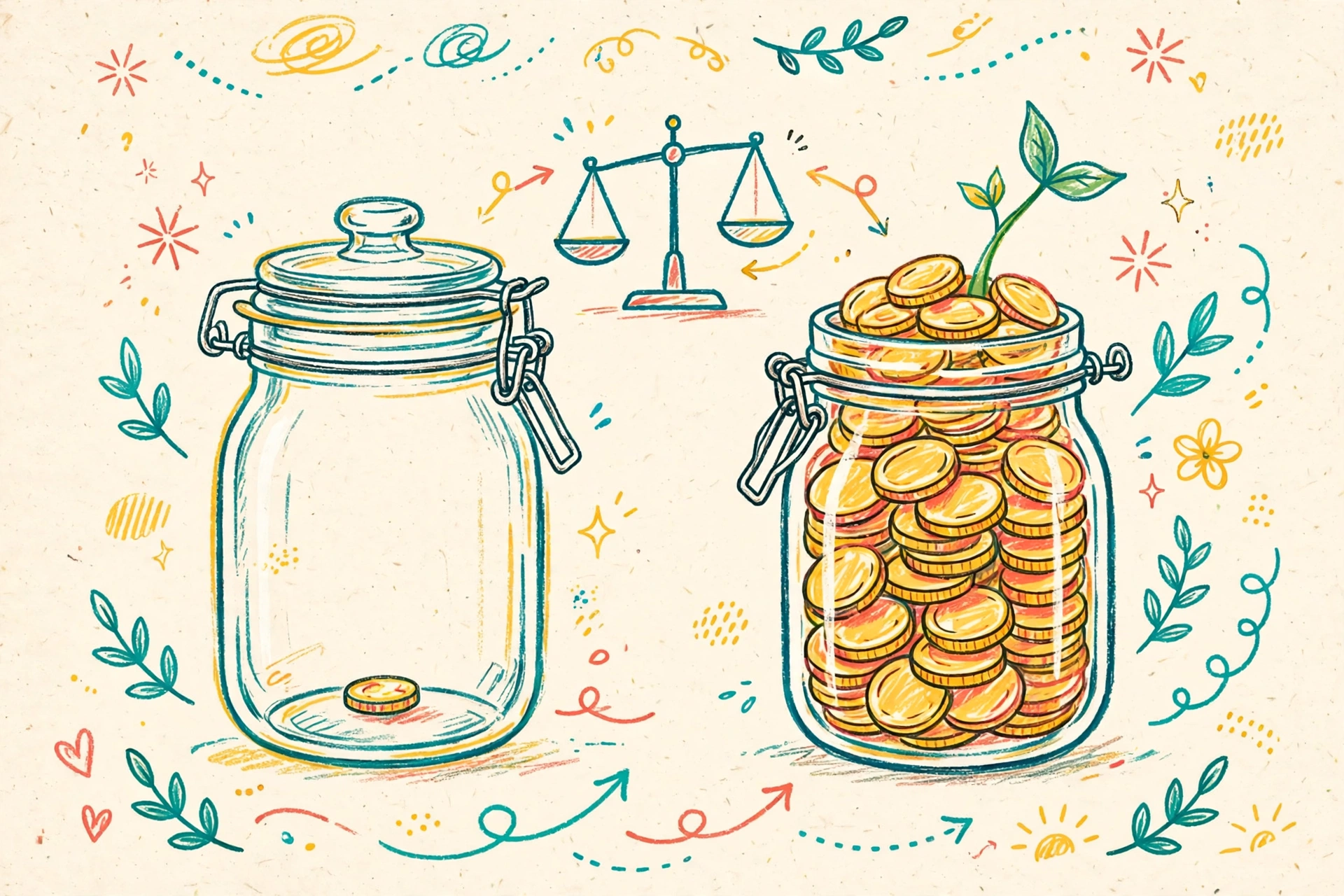
Is $370 life-changing? No. But it’s real money for zero extra risk and about fifteen minutes of setup. And it grows. Interest lands, then that interest starts earning interest of its own. Small at first. Less small later.
One warning before we go further: don’t chase the single highest number you can find and stop thinking. A rate can be a headline or a trap, and the difference lives in the fine print. We’ll get there.
What APY actually means
APY stands for annual percentage yield. It’s the number that matters, and here’s why.
APY bakes in compounding. If an account advertises 3.70% APY, that’s what you’d earn over a full year if you left the money alone — including the interest on your interest. A plain interest rate doesn’t show you that part. So when you’re comparing accounts, compare APY to APY. Apples to apples. Anything else and you’re guessing.
How does the money actually show up? Usually like this:
- Interest builds daily or monthly based on your balance.
- It lands in your account monthly in most accounts — you’ll see it as a small deposit with a boring name.
- Your next month builds on the new, bigger balance. That’s compounding doing its quiet work.
Dot’s question at this point is always the same: “So why doesn’t my current bank just pay this?” Fair question. Short answer? They don’t have to. Millions of people never move their savings, so the bank keeps the difference. Once you know that, you can’t unknow it.
Why online banks can pay more
Most high-yield accounts live at online banks. That’s not a coincidence, and it’s not a red flag either.
A traditional bank pays for branches. Rent on a nice corner building, tellers, security, the little pens on chains. An online bank skips most of that. Lower costs mean it can hand some of the savings back to you as a higher APY and still come out ahead. You give up the branch. You get the rate. For money that’s just sitting and waiting — an emergency fund, a house deposit, a tax bucket — that’s usually a trade worth making.
Wealthy puts it this way: “You’re not buying a fancier account. You’re just refusing to pay for somebody else’s lobby.”
Don’t write off your current bank completely, though. Some big banks and credit unions offer competitive savings rates too, especially on newer account types. Check yours first. Just don’t assume the account you opened years ago is still a good deal. It almost certainly isn’t paying a high yield — those older, standard savings accounts are exactly where the 0.01% and 0.37% numbers come from.
The fine print worth reading
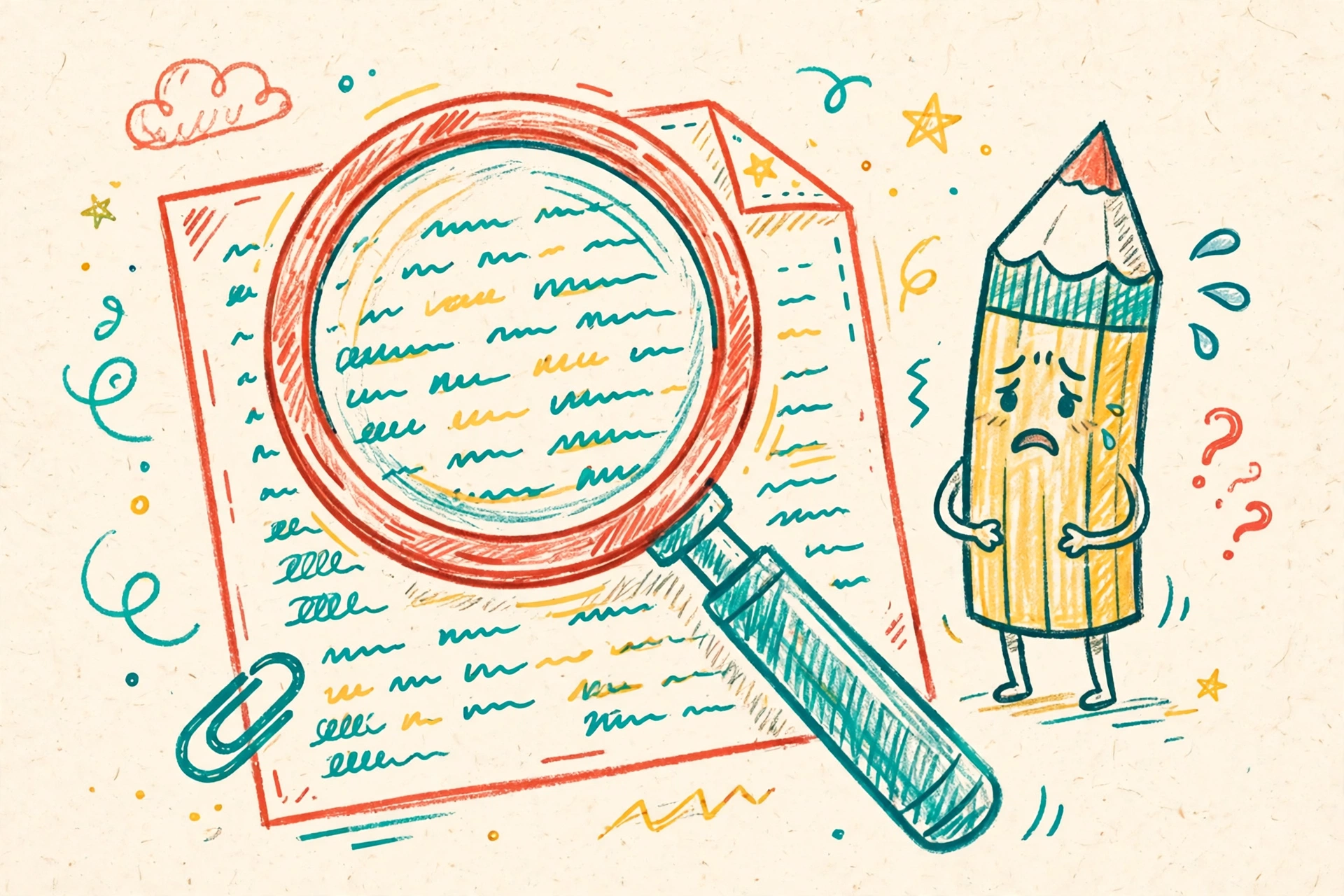
Okay. The honest part. High-yield accounts aren’t magic, and a few details can quietly eat the advantage if you miss them.
The rate moves. Almost every high-yield APY is variable. It can rise or fall, often after the Federal Reserve moves its benchmark rate. The rate you sign up for is not locked in. That’s normal — just don’t treat a signup rate as a promise.
Some rates have strings. Watch for these:
- A top rate that only applies up to a balance cap, with a much lower rate above it
- A minimum balance you must keep to earn the advertised APY
- An intro rate that drops after a few months
- A monthly fee that wipes out your interest if your balance dips
Moving money takes a little time. Transfers between banks commonly take a few business days to settle. So a high-yield account is a great home for money you might need next month. It’s a clumsy home for money you might need this afternoon. Keep a small cushion in your everyday checking for the afternoon stuff.
None of this is a deal-breaker. It’s just the price of admission — two minutes of reading now, instead of a surprise later.
Is your money safe in one?
Yes — if you pick an insured bank or credit union, and you check. Don’t skip the checking part.
Deposits at an FDIC-insured bank are covered up to $250,000 per depositor, per insured bank, per ownership category, according to the FDIC. Credit unions carry similar federal insurance through the NCUA, also up to $250,000 per member for most accounts, according to the NCUA. If the bank failed — a rare event, but it happens — insured money comes back to you up to those limits.
How do you confirm a bank is actually insured? The FDIC runs a free lookup tool called BankFind. Search the bank’s exact legal name before you send a dollar. If it isn’t in there, walk away. Simple rule, no exceptions.
And watch for impostors. Some apps and fintech products sound like banks but hold your money at a partner bank instead — the insurance still applies in many of those setups, but the chain is longer and the terms matter more. If you can’t clearly tell which insured bank holds your money, that’s your answer. Pick a clearer one.
How to open one, step by step
No drama here. Most people finish this in one sitting.
- Pick your account. Compare APY, sure, but also the balance cap, minimums, and fees from the section above. A slightly lower rate with no strings often beats a headline rate with four conditions.
- Verify the insurance. Run the bank’s name through FDIC BankFind. Thirty seconds. Do it anyway.
- Apply online. You’ll need your Social Security number, a government ID, and your current bank’s routing and account numbers for the first transfer.
- Fund it. Start with whatever you’ve got — even $100 counts. Link your checking account and set the transfer going.
- Automate a payday transfer. A small automatic move every payday beats a heroic manual move you forget by March.
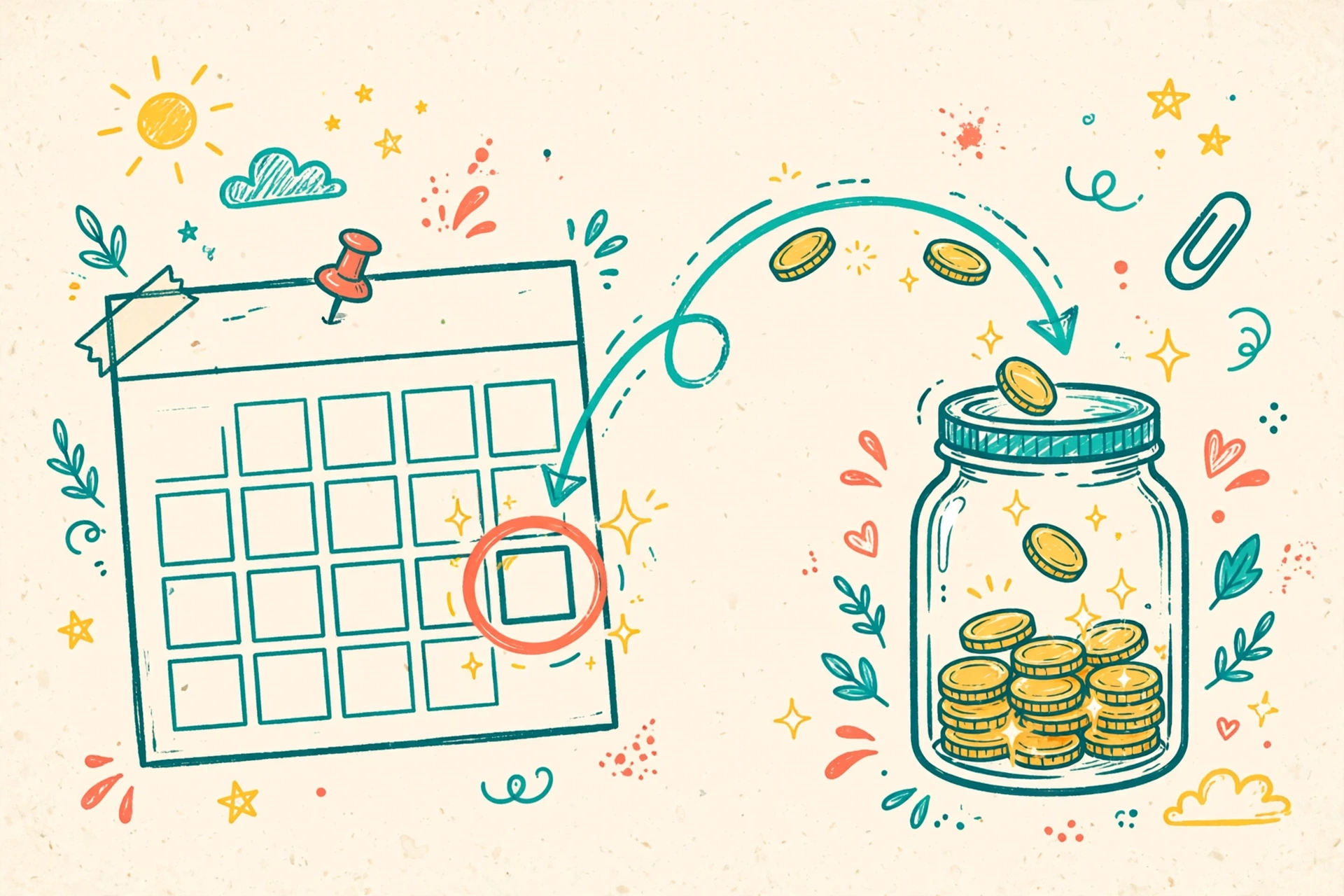
That last step matters more than the rate, honestly. Dot can tell you why. She opened her account in a burst of motivation, moved money twice, then forgot for five months. The account was fine. The habit wasn’t. Automation fixed what motivation couldn’t.
Where this kind of account fits — and where it doesn’t
A high-yield savings account has a clear job description. Short-term money that needs to stay safe and reachable. Think:
- Your emergency fund — three to six months of expenses is the target most financial planners cite
- Money for a goal inside the next year or two: a car, a move, a wedding, a tax bill
- A buffer that smooths out uneven income
And here’s what it isn’t. It isn’t an investment, so it won’t grow like one — over long stretches, inflation can outrun even a good APY. It isn’t a checking account, so don’t run daily spending through it. And it isn’t a place to chase yield by hopping to a new bank every time someone offers a fraction more. Rate-chasing has a cost too: your time, your attention, and transfers sitting in limbo. Pick a good account. Fund it. Let it be boring.
Boring is the point. Wealthy again, because he can’t help himself: “Exciting savings accounts are usually exciting for the bank.”
So, back to Dot’s eleven cents. That statement wasn’t a failure — it was information. Her money was safe. It just wasn’t being paid. Now it can be. Yours can too, and the fix takes less time than reading about it did.
Frequently asked questions
Is a high-yield savings account safe?
Yes, if it’s held at an FDIC-insured bank or an NCUA-insured credit union. Coverage runs up to $250,000 per depositor, per insured bank, per ownership category, according to the FDIC. Confirm the bank in the FDIC’s BankFind tool before you deposit.
How much interest would I earn on $10,000?
It depends on the APY. At the national average of 0.37% APY, according to FDIC data, $10,000 earns about $37 in a year. At 3.70% APY, the same balance earns about $370. Rates are variable, so treat both numbers as examples, not promises.
Can the bank lower my APY after I open the account?
Yes. High-yield savings rates are almost always variable, so the bank can raise or lower yours at any time, often after the Federal Reserve changes its benchmark rate. Your balance and your insurance don’t change when the rate does.
Do I pay tax on savings account interest?
Yes. Interest you earn is taxable income, according to the IRS, and your bank will usually send you a Form 1099-INT if you earned more than $10 in interest in a year. Set a little aside in April’s honor if the amount surprises you.
For education only, not financial advice. Everyone’s money situation is different — when in doubt, talk to a qualified financial professional or tax advisor.