
Sinking Funds: Budget for Big Bills Without Stress

A sinking fund is money you set aside a little at a time for a bill you know is coming — car insurance, holiday gifts, the annual property tax hit. Instead of one painful $720 payment, you save $60 a month. When the bill lands, the money’s already sitting there. That’s the whole trick, and it works.
Dot stared at the email on her phone. Car insurance. $720. Due in three weeks.
“I knew this was coming,” she said. “Why does it still feel like an ambush?”
Wealthy, the bee, adjusted his glasses. “Because knowing and saving are two different hobbies. You did the first one really well.”
He had a point. The bill wasn’t a surprise. It shows up every single year, same month, roughly the same size. It just never got a line in the budget — so every year it behaved like an emergency, and every year it went on a credit card or came out of money that already had another job.
The bills that wreck a budget are rarely surprises
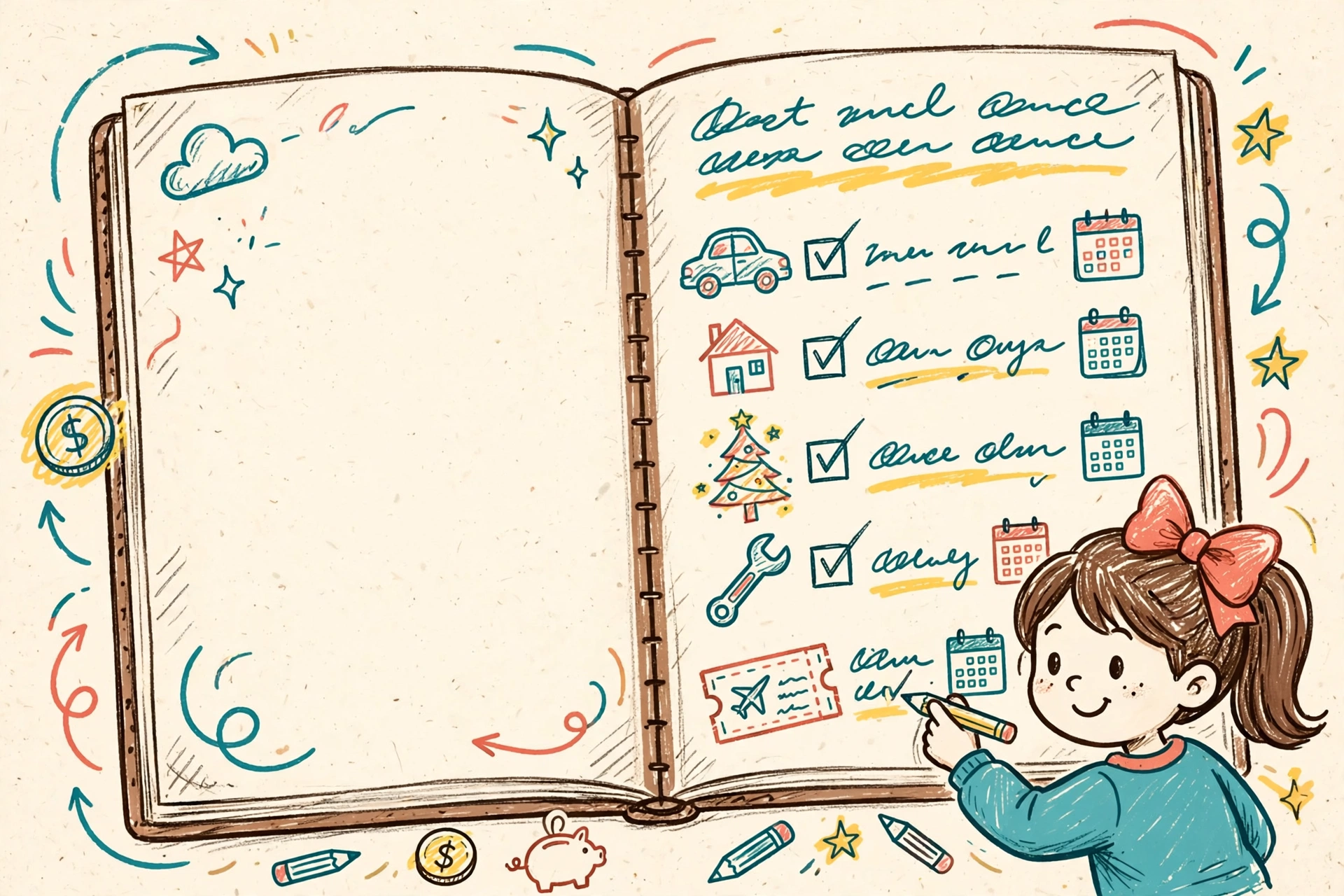
Pull up your last twelve months of bank statements. Hunt for the big charges that made you wince.
Odds are they weren’t random. Most of them were sitting on the calendar the whole time, waving politely, and still they caught you off guard. Here’s the usual line-up:
- Car insurance premiums paid once or twice a year instead of monthly
- Property tax and homeowner’s insurance, if they aren’t bundled into your mortgage payment
- Holiday gifts, birthdays, and the travel that tags along with them
- Car registration, inspections, and tires you’ve watched wear down for months
- Annual subscriptions and memberships that renew quietly while you’re not looking
- Back-to-school costs, summer camp, tuition deposits
- Routine vet care — the checkups and vaccinations you can see coming a mile away
None of these are emergencies. They’re bills in disguise. The disguise is the gap: pay something once a year and your brain files it under “later.” Monthly bills get respect because they show up monthly. Yearly bills sneak.
The math: one division per bill
Take the bill. Divide by the number of months until it’s due. Save that much every month. Done.
That’s really the entire formula, so let’s run it on the usual suspects:
| The bill | Yearly cost | Months to save | You set aside |
|---|---|---|---|
| Car insurance | $720 | 12 | $60 a month |
| Holiday gifts | $600 | 12 | $50 a month |
| Property tax | $2,400 | 12 | $200 a month |
| Annual subscriptions | $180 | 12 | $15 a month |
| Family vacation | $1,200 | 12 | $100 a month |
Short on runway? Say the insurance bill is due in three months, not twelve. Then it’s $240 a month until it’s paid — steep, sure. But after that first cycle you restart at $60, and the sting never comes back. The first round is always the hardest. Every round after that is just maintenance.
Add your funds together and you get one monthly number. Maybe it’s $125. Maybe it’s $340. Either way, it replaces five or six separate ambushes with a single calm line in your budget, and calm is underrated.
Set up your first sinking fund in four steps
You don’t need an app, a spreadsheet with forty tabs, or a free Saturday. You need a list and one automatic transfer.
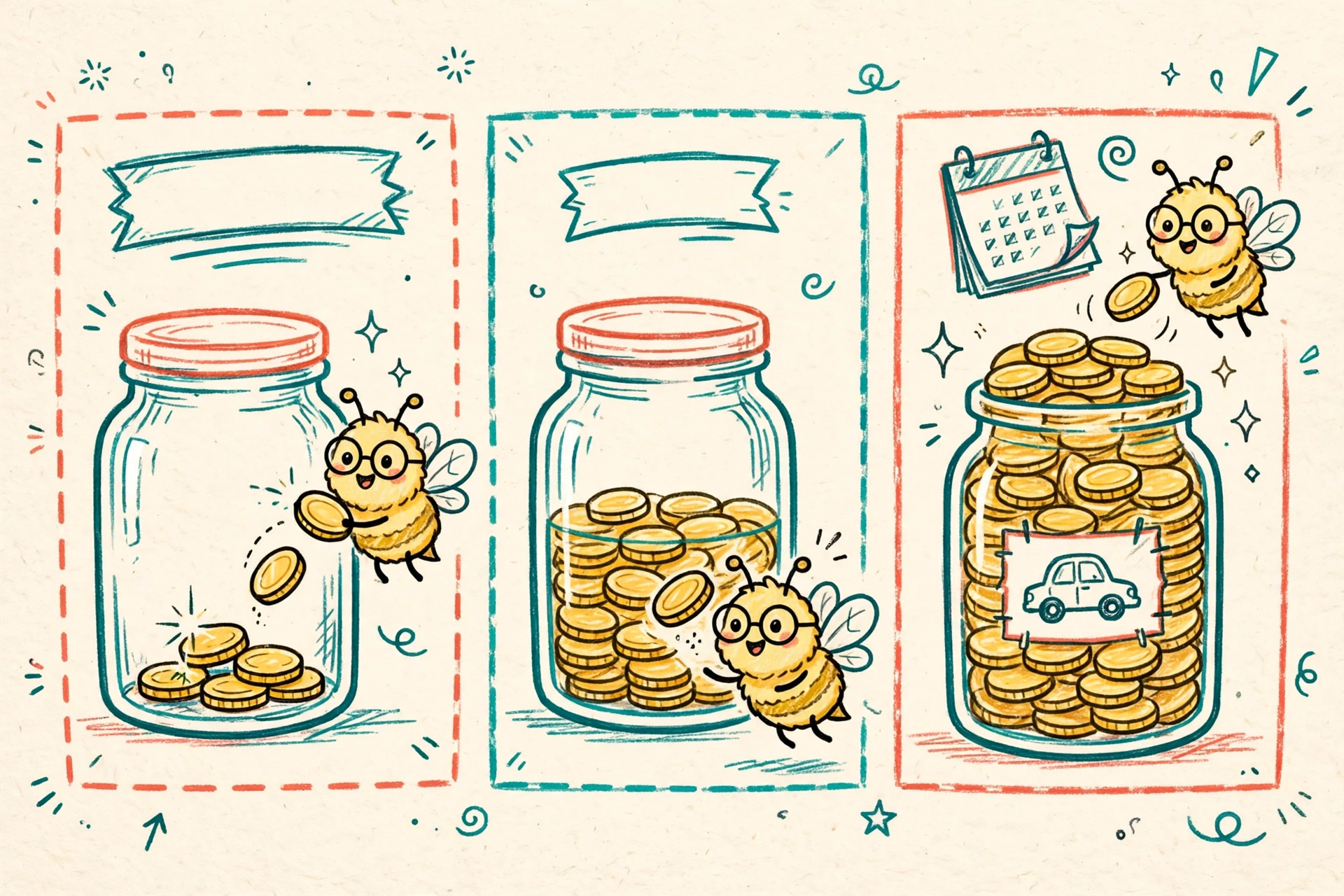
- List every big, predictable bill. Walk through a full year, month by month. If it happened last year and it’ll probably happen again, it goes on the list. Don’t forget the sneaky small ones — the $15-a-month app that’s billed once a year at $180.
- Write down the cost and the due date. Use last year’s amount, then round up a little. Bills rarely shrink. Rounding a $720 target up to $780 buys you a cushion instead of a shortfall.
- Do the division. Cost divided by months left equals your monthly amount. Write it next to each bill so the whole picture sits on one page.
- Automate the transfer. Set up an automatic move to savings for the day after payday, covering the combined monthly total. Leave it to willpower and a good mood, and some month will talk you out of it. A standing transfer never argues.
Run the numbers on your own biggest bill
Pick the bill that stresses you out the most. Put its cost into the calculator below, add what you could set aside each month, and you’ll see how long the saving takes — or work backwards from your deadline to the monthly amount you’d need.
Most people find the monthly number smaller than they feared. $60 a month sounds almost too easy compared with a $720 ambush — and that’s the point. The bill didn’t change size. You just stopped meeting it all at once.
Where do you actually keep the money?
Two setups work. Pick the one you’ll actually stick to, because the best system is the one still running in month nine.
One account, tracked on paper. Keep all your sinking funds in a single separate savings account, and track who owns what in a notebook or a simple spreadsheet. One balance to glance at. Less admin. The catch is trust: “borrowing” from the vacation fund for a pizza night takes about four seconds, and your spreadsheet won’t tackle you.
Separate buckets for separate jobs. Many banks let you open more than one savings account, or split one account into labeled buckets. More setup, less temptation. The insurance money sits in an account actually called Car Insurance, and raiding it feels like what it is.
Either way, keep the money out of your everyday checking account. Cash parked next to your spending money gets spent — not because you’re careless, but because it looks identical to spending money. Distance is the feature.
A sinking fund is not an emergency fund
From the outside they look identical. Savings account. Money sitting in it. But the jobs are opposites, and mixing them up breaks both.
A sinking fund covers what you can predict: a known bill, a known date, a rough amount. An emergency fund covers what you can’t predict at all. The job loss. The burst pipe. The ER visit on a Saturday night.
“But my car needed a new transmission!” Fair — if you couldn’t see it coming, that’s an emergency. New tires you watched wear down for a year? Sinking fund. The line is simple: if it shows up on a calendar or repeats on a schedule, save for it on purpose. If it arrives out of nowhere, that’s the emergency fund’s job.
Spend emergency money on Christmas gifts — predictable, plannable gifts — and the real emergency two months later lands on a credit card at the worst possible moment. Two jars. Two jobs. Don’t merge them.

Three ways people quietly wreck their own funds
Raiding the jar. You borrow $200 from the holiday fund in July for something urgent-ish, fully intending to pay it back. You won’t — or you’ll repay it so slowly that December still finds the jar short. If you touch a fund, write down the repayment date the same day. Vague intentions don’t refill jars.
Starting eight funds at once. The list feels great on day one. By month two you’re tracking insurance, taxes, gifts, tires, camp, subscriptions, the dog’s teeth and a new phone, and the whole thing feels like a second job. Start with your two or three biggest bills. Add the rest once the habit is boring.
Forgetting to restart. You pay the insurance, the jar hits zero, everyone celebrates — and nobody restarts the $60. Eleven months later: ambush, again, with a strong sense of déjà vu. Restart the transfer the same week you pay the bill. That’s when the next cycle starts, whether you feel ready or not.
Frequently asked questions
How is a sinking fund different from regular savings?
Regular savings often has one vague job: “for later.” A sinking fund has a name, a target amount and a deadline. That specificity is what stops you spending it on other things — the money already has an assignment, and you can see the date it’s needed by.
How many sinking funds should I have?
Start with two or three, aimed at your biggest and most stressful bills. Many people settle somewhere between four and eight small funds once the habit sticks. If tracking them starts to feel like homework, merge the small ones into a single “annual bills” fund and keep only the big ones separate.
What if I can’t afford the full monthly amount?
Save part of it. Half a fund still turns a $720 crisis into a $360 problem, and $360 is a much easier month. You can also shrink the bill itself — shop the insurance policy, trim the gift list — or give yourself a longer runway by starting right after this year’s bill is paid.
Should a sinking fund sit in a high-yield savings account?
It can, and the interest is a nice bonus. But the account matters less than the habit: a separate account you’ll actually fund beats a slightly better rate you’ll forget to use. Keep the money somewhere safe and easy to reach. Don’t invest it — a bill due in eight months can’t wait for a bad market month to recover.
For education only, not financial advice. Your bills, income and timing will look different from the examples above — adjust the amounts to fit your own situation, and talk to a qualified financial professional before making big money decisions.
This article was created with AI assistance and reviewed by our editorial team before publishing.