
What Is a Target-Date Fund? How It Works

A target-date fund is a single fund that holds a mix of stock and bond funds and slowly shifts that mix as a chosen year gets closer. You pick the year nearest when you expect to retire, and the fund handles the rebalancing. One choice, fewer decisions, no calendar reminders.
Dot stared at her workplace plan menu and sighed. Twenty-something funds. Names like riddles.
“Why does one of them just say 2055?” she asked.
Wealthy grinned. “That one is not a riddle. It is a whole plan wearing a year as a name tag. Let’s open it up and see what is inside.”
What is a target-date fund, in plain English?
A target-date fund is a fund of funds built around one year — the year you expect to retire or start spending the money. Early on it leans heavily toward stocks for growth. As the year approaches, it gradually moves toward bonds and steadier holdings, and it keeps rebalancing on a set schedule so you don’t have to.
That is the whole idea. Four parts make it work:
- One year does the steering. A 2055 fund and a 2035 fund may hold similar ingredients, but they sit at different points on the same road.
- The mix starts growth-heavy. With decades left, the fund holds mostly stock funds, because time gives rough years room to recover.
- The mix shifts on a schedule. That preset path is called the glide path, and it moves a little each year, not in one big jump.
- Rebalancing happens inside the fund. You don’t sell one fund and buy another. The manager does that work for you.
The SEC’s Investor.gov glossary describes these funds the same plain way: the mix changes over time and becomes more conservative as the target date nears. No magic. Just a timetable.
Think of it like a train that slows down as it nears the station. Early in the trip, speed is the point. Near the end? Arriving in one piece matters more.
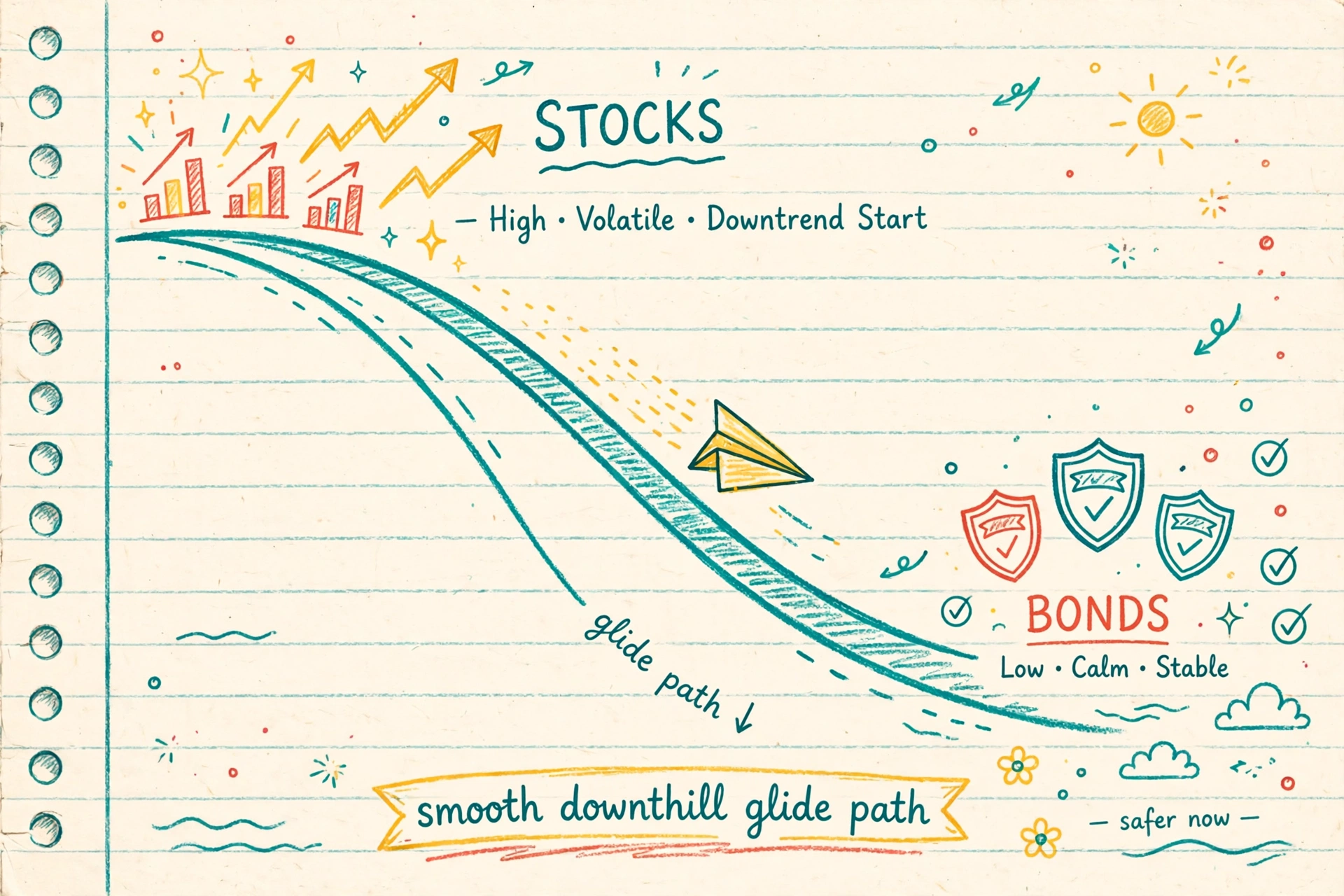
How does a target-date fund get more cautious over time?
It follows its glide path. Year by year, the fund trims its stock funds and adds to its bond funds, so a fund that starts out bold ends up far calmer by its target year. The change is gradual and automatic, and the exact path differs by provider — two funds with the same year can still take noticeably different roads.
Here is the shape most glide paths share. These are illustrations of the pattern, not a promise about any single fund:
| Stage | What the mix tends to do | Why |
|---|---|---|
| Far from the year | Mostly stock funds | Growth matters most, and there is time to ride out drops |
| Middle years | Stocks ease down, bonds build up | Balance starts to share the driver’s seat |
| Near the year | Bonds and steadier holdings lead | Protecting what you built matters more |
| At and after the year | Settles, or keeps easing slowly | Depends on whether the fund is built “to” or “through” the date |
That last row trips people up. A “to” fund reaches its final, calmest mix at the target year and stays there. A “through” fund keeps shifting well past the year, assuming you will spend the money slowly across retirement. Neither is sneaky. Both say so in the prospectus. You just have to look.
Dot had a question here, and it’s a good one. “If two 2050 funds can act differently, is the year on the label even honest?” It is honest about the destination. It’s just quiet about the route — and the route is worth five minutes of your reading time.
What is actually inside one of these funds?
Peek under the lid and you won’t find individual stocks picked by hand. You’ll find other funds. A typical target-date fund holds a US stock index fund, an international stock index fund, a bond index fund, and sometimes a small slice of cash-like holdings.
So it’s a basket holding baskets. That sounds layered, and it is. But it’s also why one purchase can spread your money across thousands of companies and bonds at once. Diversification, pre-assembled.
One catch hides in that neat package. You can’t tune the parts. If you’d rather hold more international stocks, or none at all, a target-date fund won’t let you reach in and adjust one shelf. You take the recipe as written, or you build your own mix from separate funds. Both are fair choices. They just suit different cooks.
What do target-date funds cost?
You pay the fund’s expense ratio, one yearly percentage taken from the money inside the fund. Because a target-date fund holds other funds, check whether its stated cost already includes the costs of those underlying funds — for most modern index-based series it does, but the prospectus is the place that settles it, not a sales page.
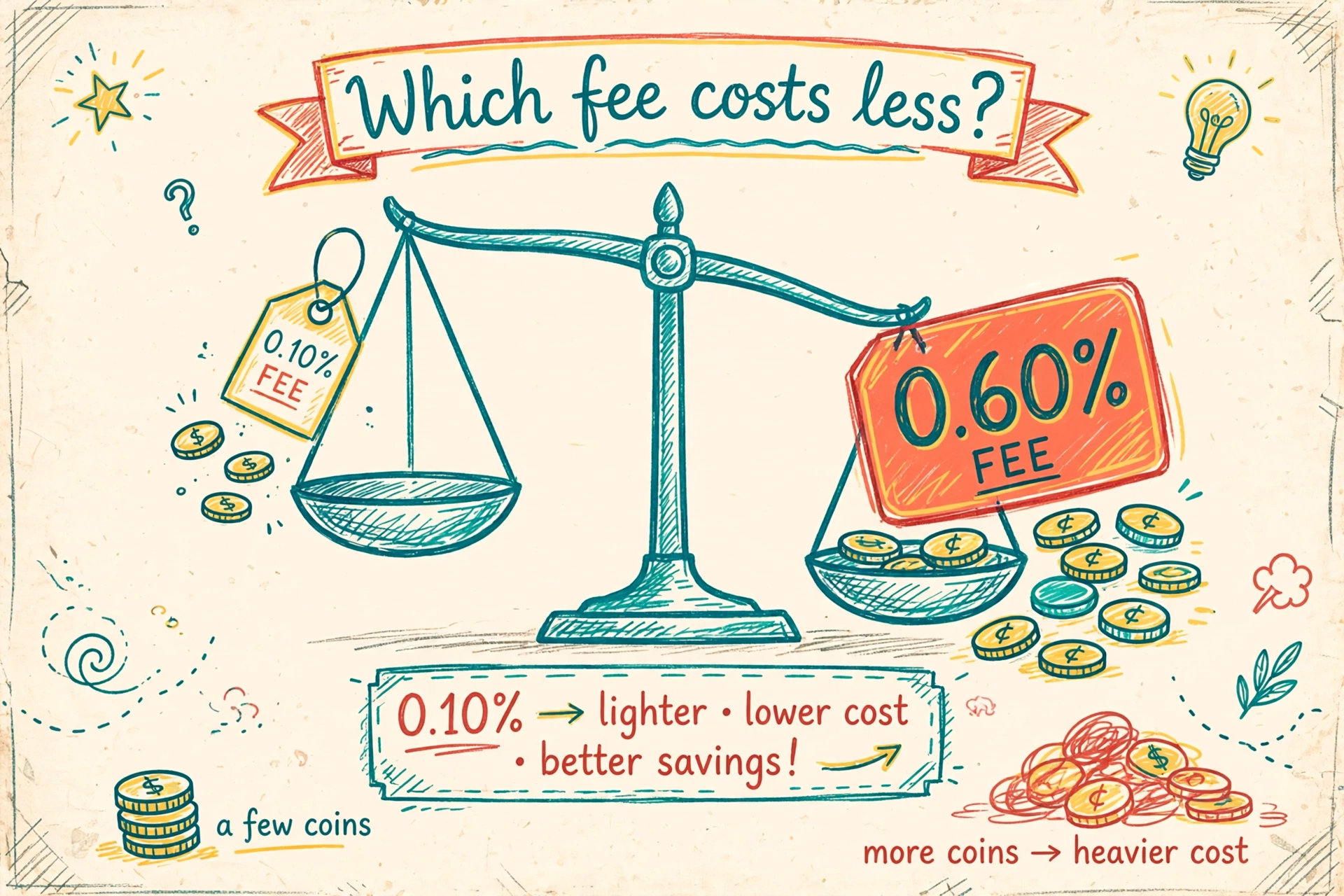
Fees sound dull. They aren’t. Run a quick example in your head: on a $10,000 balance, a 0.10% yearly cost is $10 a year, while a 0.60% cost is $60 a year. Same market. Same year on the label. Fifty dollars quietly walking out the door, every year, and the gap grows as the balance grows.
Where do you find the real number? The fund’s prospectus and its page on the provider’s site both list the expense ratio. The SEC’s Investor.gov introduction to investing is a solid free place to brush up on how fund costs and disclosures work before you compare.
Try your own retirement numbers
A target-date fund handles the mix, but it can’t pick your savings rate for you. Run your age, salary, and contribution through the calculator below and see what the habit itself builds over time.
What should you check before picking a target date?
Check five things: the year closest to when you’ll need the money, whether the fund runs “to” or “through” that year, the glide path itself, the expense ratio, and what’s inside. Those five checks take about fifteen minutes, and they tell you more than the fund’s name, its past returns, or anyone’s star rating ever will.
Work through them in this order:
- Start with the year, not a birthday. Count to when you expect to retire or tap the money. A few years either way rarely matters. A decade does.
- Ask “to” or “through”? If you’ll need a lump sum soon after the date, a fund that settles at the date fits that plan better on paper. If you’ll spend slowly, a “through” path matches that shape.
- Read the glide path picture. Every provider publishes it. How much stock does the fund hold at the target year? That one number tells you how calm — or how bold — your landing will be.
- Compare the expense ratio. Same year, similar mix, lower cost? That gap compounds in your favor instead of against you.
- Peek at the ingredients. Index funds or actively managed funds inside? US only, or international too? You don’t need to love every ingredient. You should at least know what’s in the soup.
Wealthy’s rule for this is short: “Pick the fund by its path and its price. The year is just the cover of the book.”
Quick answers
Do target-date funds keep changing after the target year?
Some do, some don’t. Funds labelled “to” settle into a fixed mix at the target year. Funds labelled “through” keep shifting for years after it. The prospectus tells you which kind you hold.
Can I hold a target-date fund outside a retirement account?
Yes, you can buy one in a regular brokerage account. Just know the fund still rebalances and may pay out distributions, and those payouts can be taxable in a regular account.
What if I plan to retire earlier or later than the fund’s year?
Pick the year closest to when you expect to need the money, not your birth year. The date is a planning marker. If your plans move by a decade, the fund year you chose may need a second look.
So, back to Dot and that long menu of funds. She didn’t need twenty choices explained one by one. She needed one honest question answered: when do I want this money, and how much fuss do I want along the way? A target-date fund is simply the low-fuss answer — a mix that starts bold, lands gently, and asks very little of you in between.
For education only, not financial advice.
This article was created with AI assistance and reviewed by our editorial team before publishing.