
Year-End Tax Documents: Gather Them Before January
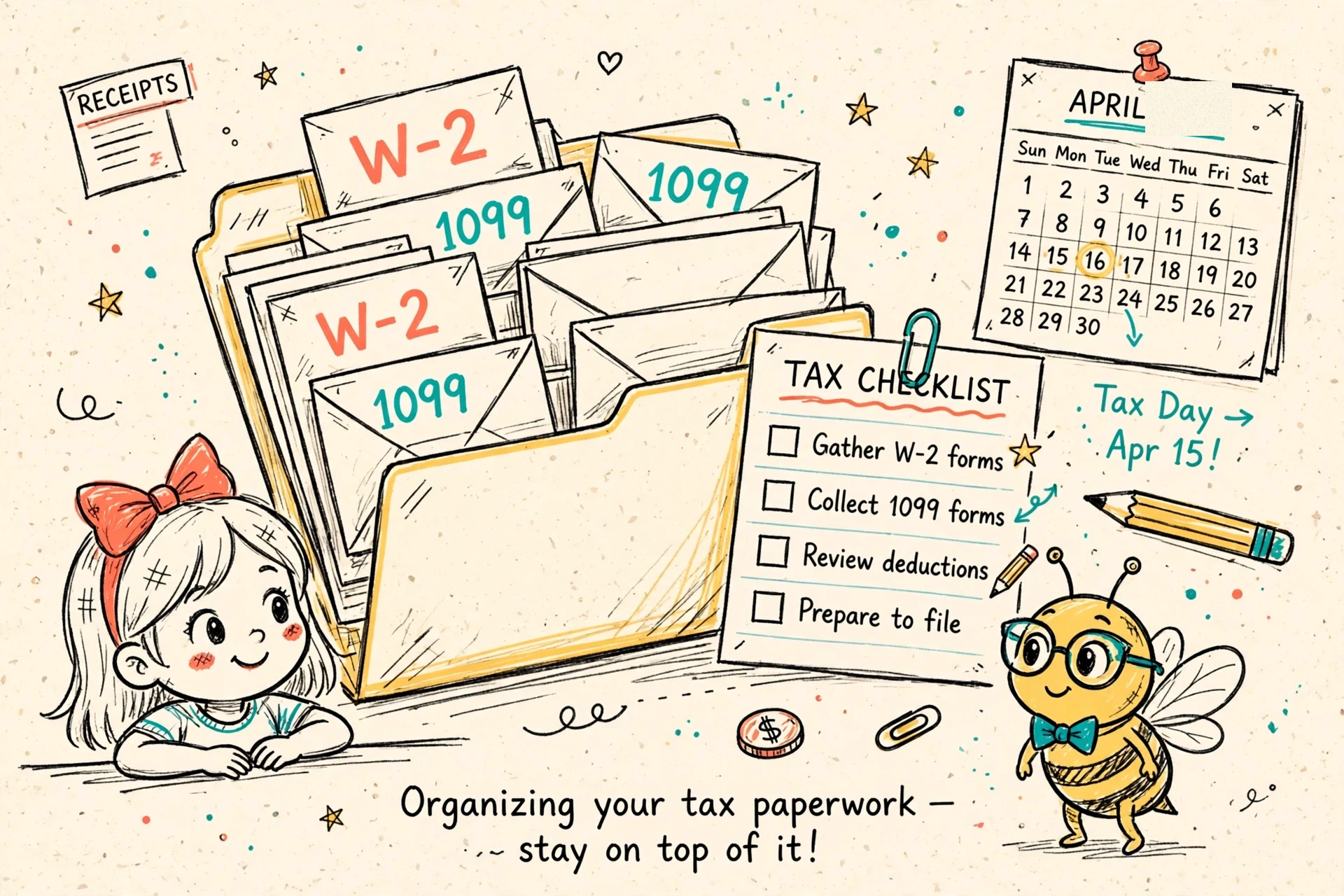
Most of your tax paperwork lands in one short window. For the 2026 tax year, employers and payers must get W-2s and 1099s to you by February 1, 2027. Gather each form as it arrives, check it off against last year’s return, and chase anything missing by mid-February instead of discovering the gap in April.
“Can’t I just wait for the mail and sort it out later?” Dot asked, eyeing the empty folder on the desk.
“You can wait,” Wealthy said. “Just don’t wait passively. The forms come on a schedule. If you know the schedule, a missing envelope stands out while there’s still time to fix it.”
What tax documents should you gather before the year ends?
Four piles cover most households. You need the forms that report your pay — a W-2 from every job, plus a 1099-NEC if you freelanced. You need the bank and brokerage forms — 1099-INT, 1099-DIV, 1099-B, 1099-R. You need the home and benefits forms — 1098, SSA-1099, 1099-G. And you need your own records, starting with last year’s return. If a form showed up last year, expect its twin this year.
Pay forms. A W-2 comes from each employer you worked for during 2026, even a job you left in March. Freelance or contract work shows up on Form 1099-NEC from each client. Two jobs plus a side gig can mean three separate envelopes, and they rarely arrive on the same day.
Bank and brokerage forms. Form 1099-INT reports interest, 1099-DIV covers dividends, and 1099-B reports sales of stocks or funds. Retired, or tapped a retirement account? That’s Form 1099-R. Plenty of these never touch your mailbox — banks and brokers park them in your online account, so log in and look.
Home and benefits forms. Form 1098 from your mortgage servicer reports the mortgage interest you paid. Social Security benefits arrive on Form SSA-1099, which the Social Security Administration sends by early February. Unemployment benefits and some state tax refunds come on Form 1099-G from your state.
Your own records. Nobody mails you these. Last year’s return is the map — it lists every form you had last time. Add donation receipts, records of estimated tax payments, and notes on anything unusual: a move, a new baby, a first rental property. Odd years produce odd paperwork.
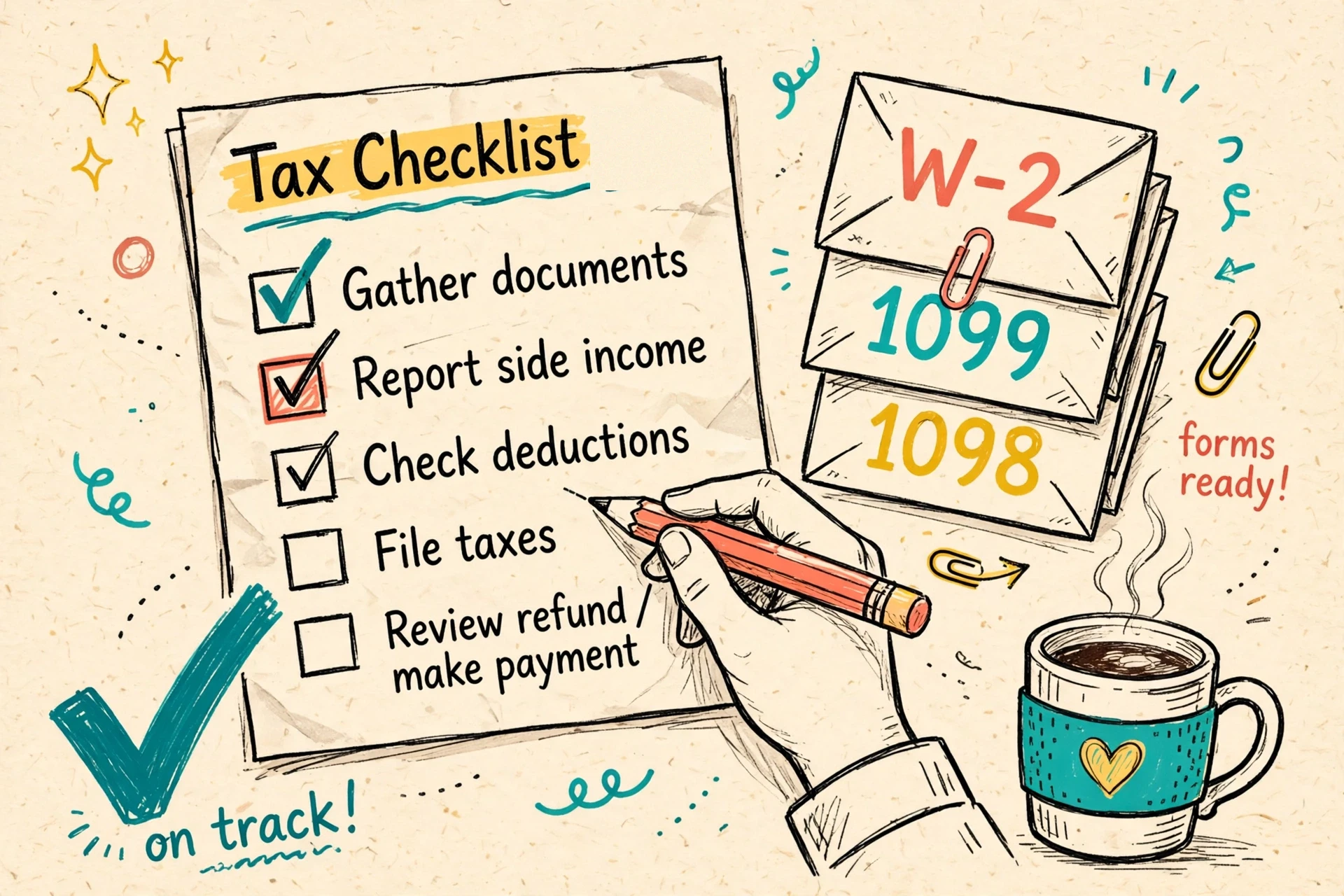
Turn the pile into a checklist you can tick off
Here’s the step almost everyone skips: write down the forms you expect before they arrive. A form you expected and never got is easy to spot in February. A form you never thought about ambushes you in April, when the sender’s payroll department is busiest and slowest.
Want the list built for you? Our sister site Verystep runs a free Tax Document Checklist: pick your situation, get the forms to expect with their IRS deadlines, and print a blank tracker to check off as each one arrives. Nothing you type is uploaded or saved — the whole thing runs in your browser.
When do tax forms arrive?
Most forms share one deadline. According to the IRS guide to information returns, February 1, 2027 is the last day for employers to furnish W-2s and for payers to send 1099-NEC and 1099-MISC forms for the 2026 tax year — the usual January 31 date shifts because it falls on a Sunday. Brokerage 1099-B forms get until February 16, 2027. Your own return is due April 15, 2027.
| Form | Who sends it | Due to you by |
|---|---|---|
| W-2 | Your employer | February 1, 2027 |
| 1099-NEC | Clients and other payers | February 1, 2027 |
| 1099-MISC | Payers of rent and other income | February 1, 2027* |
| 1099-INT / 1099-DIV | Banks, funds, brokers | February 1, 2027 |
| 1098 | Your mortgage servicer | February 1, 2027 |
| 1099-B | Your broker | February 16, 2027 |
| SSA-1099 | Social Security Administration | Early February |
*Boxes 8 and 10 of Form 1099-MISC get until February 16, 2027.

Now flip the hat around. If you paid a contractor during 2026 — a remodel, freelance design work for your small business — you may be the one sending a 1099-NEC. For payments made in 2026, the IRS reporting threshold is $2,000 per the updated IRS guidance, up from the old $600 figure many people still quote. Payers face the same February 1, 2027 deadline, so January is the month to line those up, not February.
What if a tax form never shows up?
Start with the sender, not the IRS. The IRS tells taxpayers to contact the employer, payer, or issuing agency first and ask for the missing or corrected form. Still nothing after that? Your IRS online account may already hold a wage and income transcript, and a substitute form exists for a missing W-2. The full playbook sits in IRS Tax Tip 2026-25.
- Contact the sender. Payroll for a W-2, the client or bank for a 1099. Ask when it was sent and where — an old address on file explains half of all missing forms.
- Check your IRS Individual Online Account. Wage and income transcripts there can show what the IRS received from your employer or payer, though a transcript can lag if the sender filed late.
- Use the substitute where one exists. Form 4852 stands in for a missing Form W-2 or Form 1099-R when the sender simply won’t produce one.
- Fix it if the real form turns up later. If the actual form arrives after you filed and the numbers differ from what you reported, the IRS says to amend the return with Form 1040-X.
One thing not to do: sit on a missing form and let April 15, 2027 slide past. A missing W-2 doesn’t move your filing deadline. And if your situation is tangled — equity pay, a business, income from two states — that’s a question for a CPA or an enrolled agent, not a checklist.

How long should you keep all this paper?
Longer than feels reasonable. According to the IRS recordkeeping guidance, most people should keep tax records for 3 years after filing, and employment tax records deserve at least 4 years. One folder per tax year — paper, scanned, or both — makes that painless. The 2026 folder you’re building now is also next year’s map: when the 2027 forms start landing, you’ll know exactly what “complete” looks like.
Quick answers, no digging
When should my W-2 arrive?
By February 1, 2027. That’s the IRS deadline for employers to furnish W-2s for the 2026 tax year — January 31 falls on a Sunday, so it shifts a day. Not in hand by mid-February? Call payroll. Don’t just wait.
I did freelance work. Which form should I expect?
Form 1099-NEC from each client, due to you by February 1, 2027. For 2026 payments, payers generally report once payments reach $2,000, so a small gig may not trigger a form. Your invoices and bank records still matter — keep them either way.
A form has the wrong amount on it. What now?
Ask the sender for a corrected form first — a W-2c in the case of a W-2. If the corrected version arrives after you filed and it changes the numbers, the IRS says to fix the return with Form 1040-X.
Gathering is the boring part of tax season, and that’s exactly why it works. Twenty minutes with a checklist in December buys you a calm February — no envelope archaeology, no April surprises, just a folder that fills up on schedule.
For education only, not financial advice. This article covers federal paperwork timing in general terms; questions about your own taxes belong with a CPA, an enrolled agent, or the IRS itself.
This article was created with AI assistance and reviewed by our editorial team before publishing.