
Envelope Budgeting: How Cash Categories Work
Envelope budgeting puts a hard edge on the categories where your money quietly leaks away. You set a cash amount for things like groceries, eating out, and fun, tuck it into labeled envelopes, and spend only what is inside. When an envelope is empty, that category waits until payday.
Dot tried it after one weird month. Her bank balance looked fine on the first. By the twentieth, she was squinting at her phone, asking where three hundred dollars had gone.
Wealthy had a guess. “Small swipes,” he said. “None of them felt like spending. That is the problem.”
He was right, too. A card makes every purchase feel the same size. Twelve dollars, forty dollars, ninety dollars — tap, tap, tap. Cash does not work that way. Cash gets thinner. You can feel it.
What is envelope budgeting, in plain English?
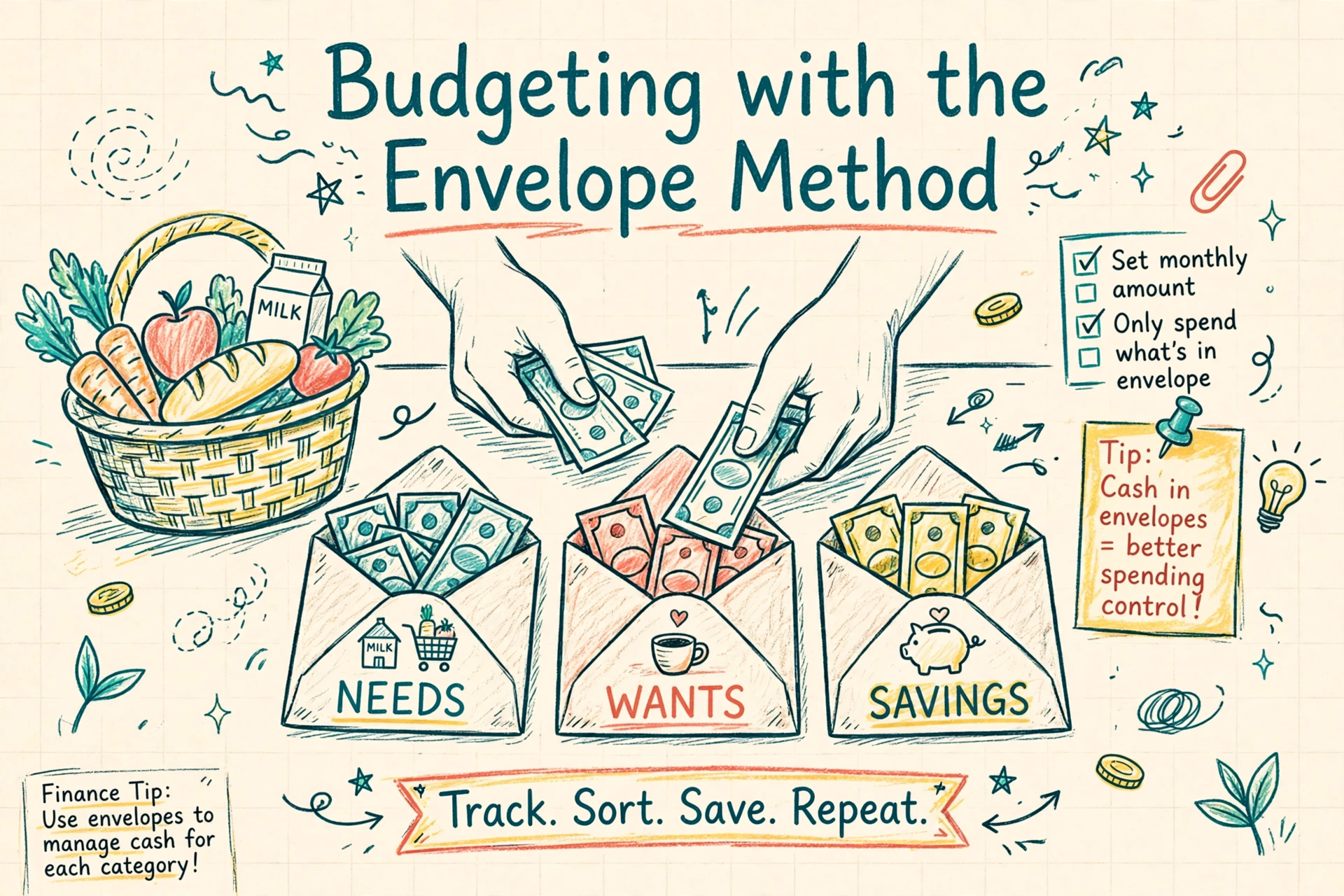
Envelope budgeting is a simple cash system with three moves: pick the categories that leak, fill each envelope with a set amount at payday, and spend only what is inside until the next refill. Bills that arrive online stay in your bank account. The envelopes handle the spending you do in person, day to day.
Here is the whole method, start to finish:
- Pick the categories that leak. Start with two or three, not ten. Groceries, eating out, and personal fun money are the usual suspects.
- Fill each envelope with a set amount. Use your last two or three months of spending as the guide, then trim a little if you want a challenge. Write the amount on the front.
- Spend only what’s inside, then stop. No quiet top-ups from the ATM. An empty envelope is the signal, not an emergency.
That third step feels harsh on paper. In real life it is oddly calm. You stop doing math in the grocery aisle because the envelope already did the math for you.
Why cash works when willpower doesn’t
Think about the last time you paid for something with a twenty. You handed it over. You got back less. Some part of your brain registered the loss, even if you said nothing.
Now think about tapping a card. Nothing leaves your hand. The money is still, sort of, in your account — until it isn’t.
Envelopes lean on that difference. They don’t ask you to be a better person. They just make the limit physical, so you bump into it early in the month, while there is still time to adjust. A limit you meet on the twenty-eighth, in an overdraft notice, helps nobody.
The Consumer Financial Protection Bureau’s budgeting tools make a similar point in plainer language: track where money goes, then build your plan around what you actually spend, not what you wish you spent. The envelope is just that idea with paper and a rubber band.
Which categories work best as envelopes?
The best envelope categories are the ones you pay for in person and tend to overshoot: groceries, eating out, coffee and snacks, entertainment, and personal spending. Rent, utilities, insurance, and subscriptions stay digital, because they are fixed, billed online, and hard to pay in cash anyway.
Here is a quick way to sort your own list:
| Good in an envelope | Keep it in the bank |
|---|---|
| Groceries | Rent or mortgage |
| Eating out and takeout | Utilities and phone |
| Coffee, snacks, small treats | Insurance premiums |
| Entertainment and hobbies | Subscriptions and loan payments |
| Personal fun money | Savings transfers |
Notice the pattern? Envelopes are for choices. The bank is for obligations. If a payment happens without a decision from you, it does not need an envelope.
Dot picked groceries and eating out for her first month. Just two. “If I start with eight envelopes,” she said, “I’ll quit by Thursday.” Smart. Two envelopes you keep beat eight you abandon.
How much cash should go in each envelope?
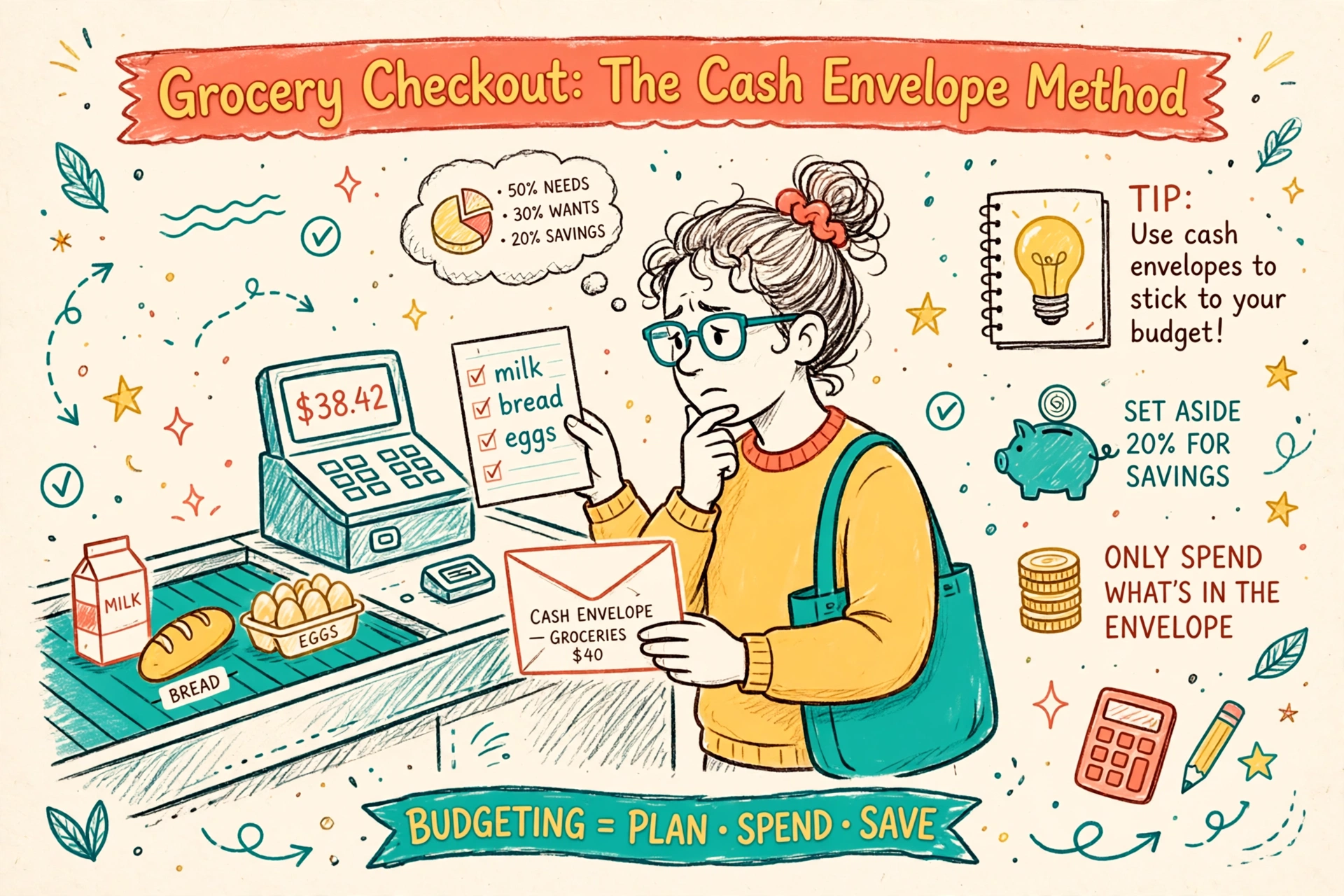
Start from what you really spent over the last two or three months, not from a number that sounds noble. If groceries averaged $460, a $450 envelope is honest and a $300 envelope is a setup. You can trim by about 5 to 10 percent for a gentle challenge, then adjust after one full month of data.
Say your take-home pay is $3,200 a month. A starter set might look like this:
- Groceries: $440 in cash, refilled on the first payday
- Eating out: $140, shared by the household, no secret second envelope
- Fun money: $80 per person, no questions asked while it lasts
These are examples, not targets. Your rent might be higher. Your grocery store might be pricier. The amounts matter less than the habit of choosing them before the month starts, while you are calm and the fridge is full.
Want to see how your own categories stack up against your pay before you stuff a single envelope? Run your numbers here first.
Try your own numbers
Split your take-home pay into needs, wants, and savings, then use the split to size your envelopes.
What happens when an envelope runs dry?
Sooner or later, one will. Probably in week three. Probably on a Friday.
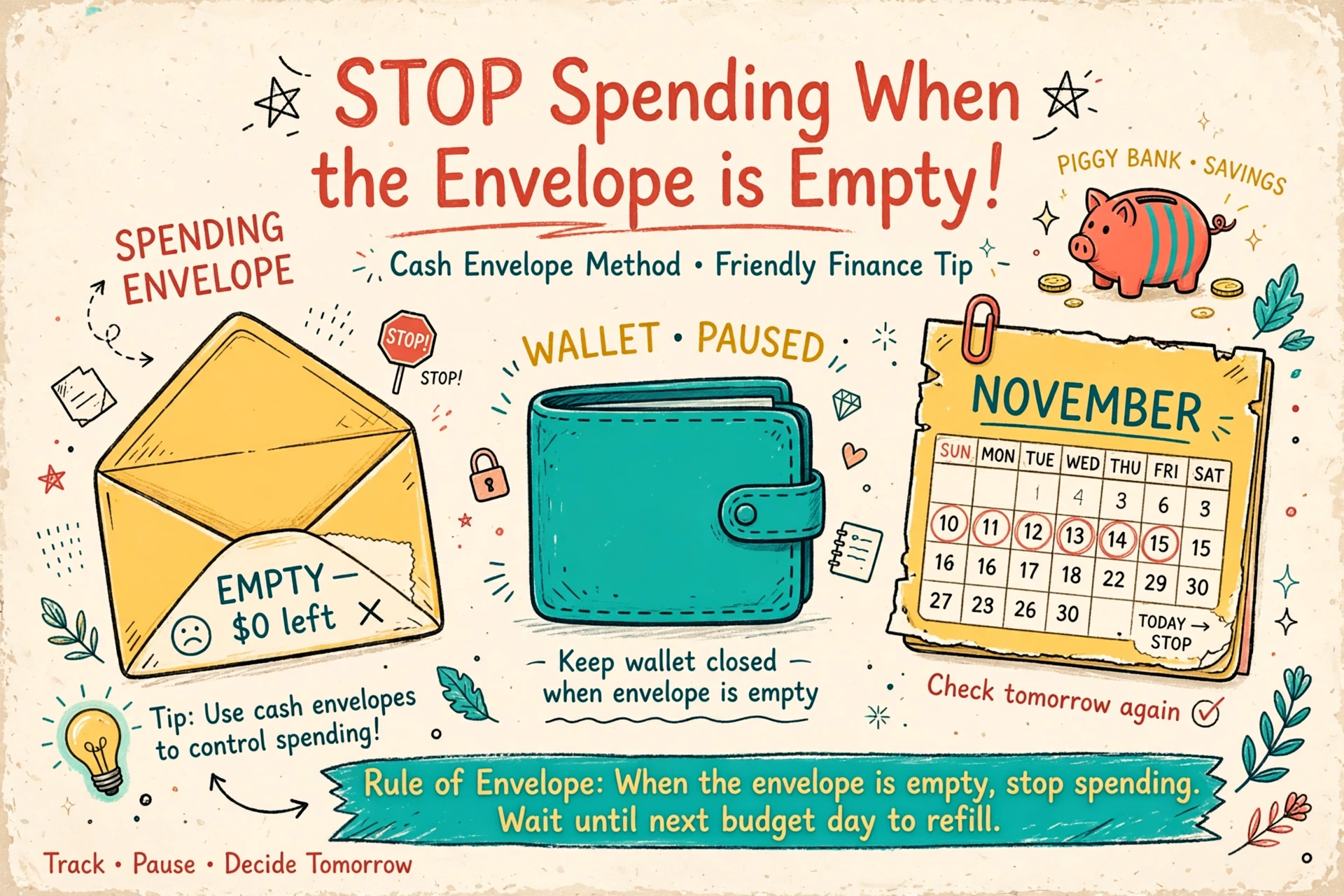
You get three honest options. First, stop. The category is done until payday, and you eat what is already in the house. Second, move money from another envelope — out loud, on purpose, and write the new totals on both envelopes. Third, admit the amount was wrong, fix it next month, and don’t pretend this month was a failure.
What you don’t do is swipe the card and call it close enough. That one quiet swipe is how the whole system melts.
And keep some perspective. An empty grocery envelope on the twenty-sixth, with pasta in the cupboard, is information. It is not a moral grade. Wealthy puts it this way: “The envelope told you the truth four days early. That’s a favor.”
Cash makes you nervous? Try the halfway version
Some people don’t like carrying cash, and some stores barely take it anymore. Fair enough.
You can run the same system with separate spending categories in a budgeting app, or with a second checking account and its own debit card for groceries and fun. The limit stays visible. The money for one job stays apart from the money for everything else.
Just be honest about the trade. A digital envelope is easier to raid. One transfer, done from the couch, and the limit is gone. If you go digital, make the raid annoying: no instant transfers, no linked overdraft, and a rule that moves happen on paper first.
Plenty of households mix the two. Cash for eating out, because that is the leaky one. Digital for groceries, because the big weekly shop is easier with a card. The method bends. It just can’t be invisible.
Quick answers, before you start
Q: Do I need envelopes for every category?
A: No. Start with the two or three categories where you overspend in person, like groceries and eating out. Fixed bills stay in your bank account.
Q: What if an envelope runs out early?
A: Stop spending in that category, or move money from another envelope on purpose and write down the change. Don’t quietly top it up with a card.
Q: Can I do envelope budgeting without cash?
A: Yes. Use app categories or a separate account with its own card. The limit has to stay visible, and moving money across should take a little effort.
So, could three paper envelopes fix the leak in your budget? Maybe not all of it. But they will show you exactly where the money goes, in a way a bank statement never quite manages — early, in your hand, while you can still do something about it.
Start small. Two categories. One month. Then decide, with real numbers in front of you, whether the envelopes earn a permanent spot in your wallet.
For education only, not financial advice.
This article was created with AI assistance and reviewed by our editorial team before publishing.