
How Much of Your Paycheck Should You Save?
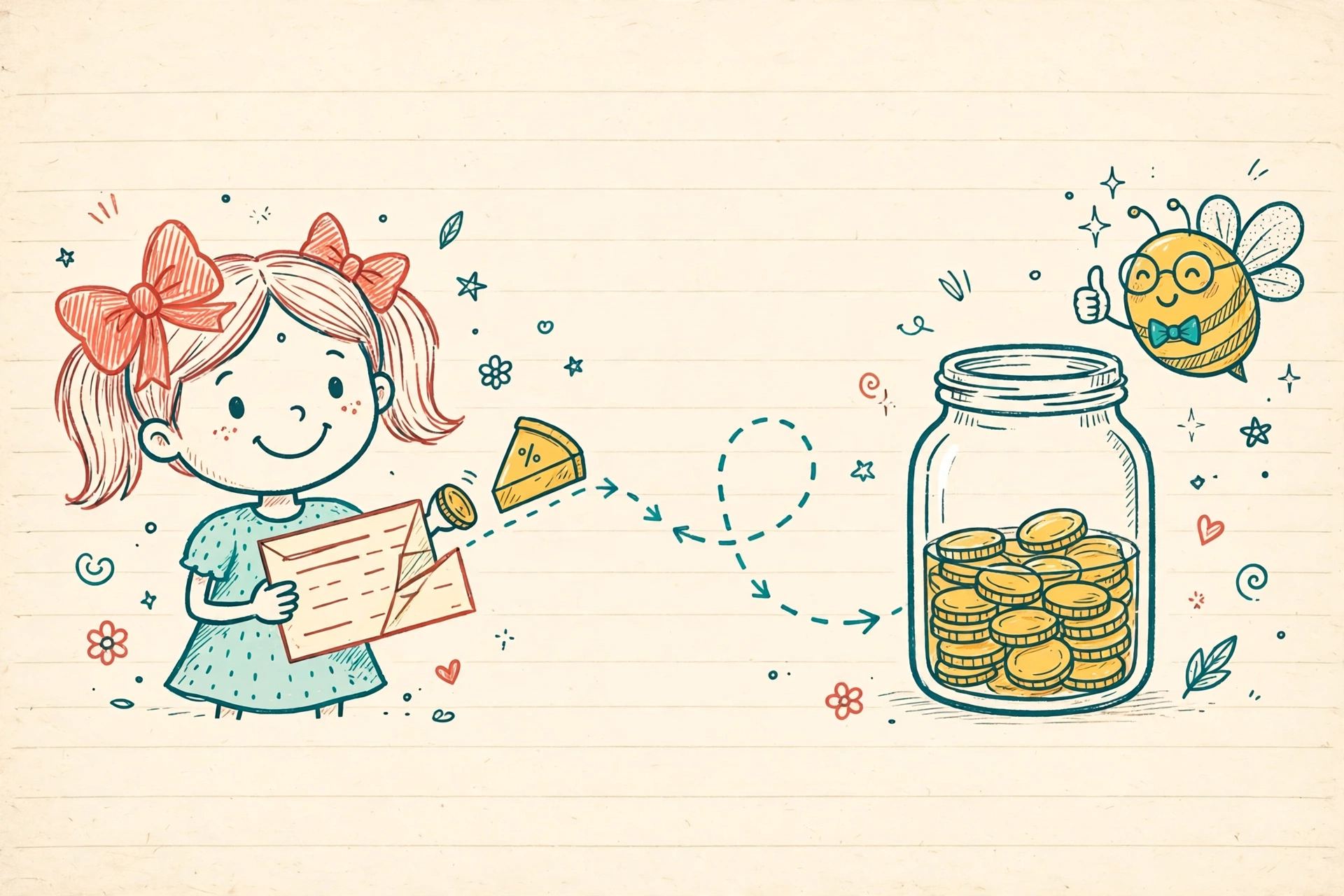
Save a percentage of each paycheck, not whatever is left over at the end of the month. A common starting range is 5 to 10 percent of take-home pay when money is tight, building toward 15 to 20 percent over time. The right number is the highest one you can repeat every payday without raiding it back.
Dot asked it out loud last payday, paycheck in hand: “Okay, but how much of this is actually supposed to stay mine?”
Good question. Nobody hands you a number at your first job. So let’s build one that fits your real life, not a stranger’s.
What percentage of your paycheck should you save?
There is no single correct percentage, but there are useful landmarks. The popular 50/30/20 rule suggests saving 20 percent of take-home pay. Many money educators point to 10 to 15 percent as a solid middle ground, and 5 percent as a genuine start when the budget is stretched thin. What counts most is not the starting line. It is picking one number and hitting it every payday.
Percentages beat fixed dollar amounts for most people, and here is why. A percentage flexes with your pay. Work some overtime? The transfer grows a little on its own. Have a short month? It shrinks with you instead of bouncing like a bill you cannot cover.
Run the landmarks against a real check. Say your take-home pay is $3,800 a month:
| Share of take-home pay | Per month | Per year, before any interest |
|---|---|---|
| 5% | $190 | $2,280 |
| 10% | $380 | $4,560 |
| 15% | $570 | $6,840 |
| 20% | $760 | $9,120 |
Look at that first row again. $190 a month is not flashy. It is still $2,280 a year that Future You does not have to borrow.
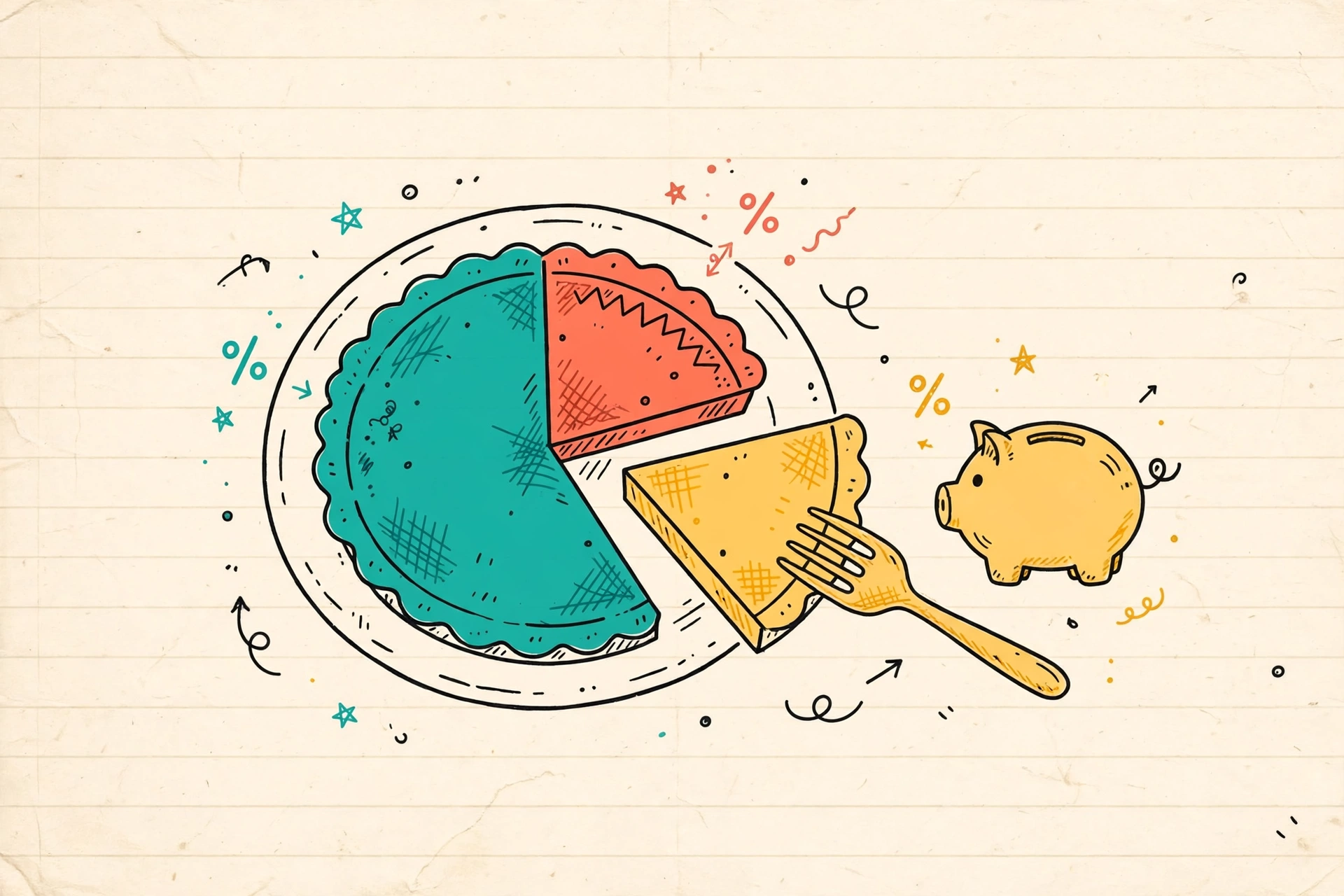
Does a small percentage actually make a difference?
Yes. A small percentage still works because the first job of saving is not growth. It is a cushion. Fifty dollars from every biweekly paycheck adds up to $1,300 in a year, and that kind of buffer turns a broken phone or a flat tire into an errand instead of an emergency.
The stakes show up in the Federal Reserve’s survey of household well-being, where 63 percent of adults said they would cover a $400 emergency expense using cash or its equivalent. Flip that around. Roughly a third of adults would need to borrow, sell something, or leave the bill unpaid.
Nobody starts saving because $400 sounds exciting. They start because they have lived the other version of that week.
So if 15 or 20 percent feels out of reach right now, do not treat the smaller numbers as failure. A starter cushion of $500 to $1,000 is a perfectly good first finish line. Cross it, then set the next one.
How do you pick your number? Four steps
Pick your number from your take-home pay, choose a starter percentage you barely notice, move it automatically on payday, and nudge it up by 1 percent on a schedule. That is the whole method. Here it is, step by step.
- Start with take-home pay. Use the amount that actually lands in your account, not your salary. Percentages of money you never see will quietly wreck the plan.
- Choose a starter percentage. Tight month? Try 5 percent. Comfortable but unsaved? Try 10. The test is simple: could you live one month at this rate without feeling punished? If yes, it is a fair start.
- Automate it on payday. Set an automatic transfer to a separate savings account for the day the check lands. Money you never watch sitting in checking is money you rarely miss.
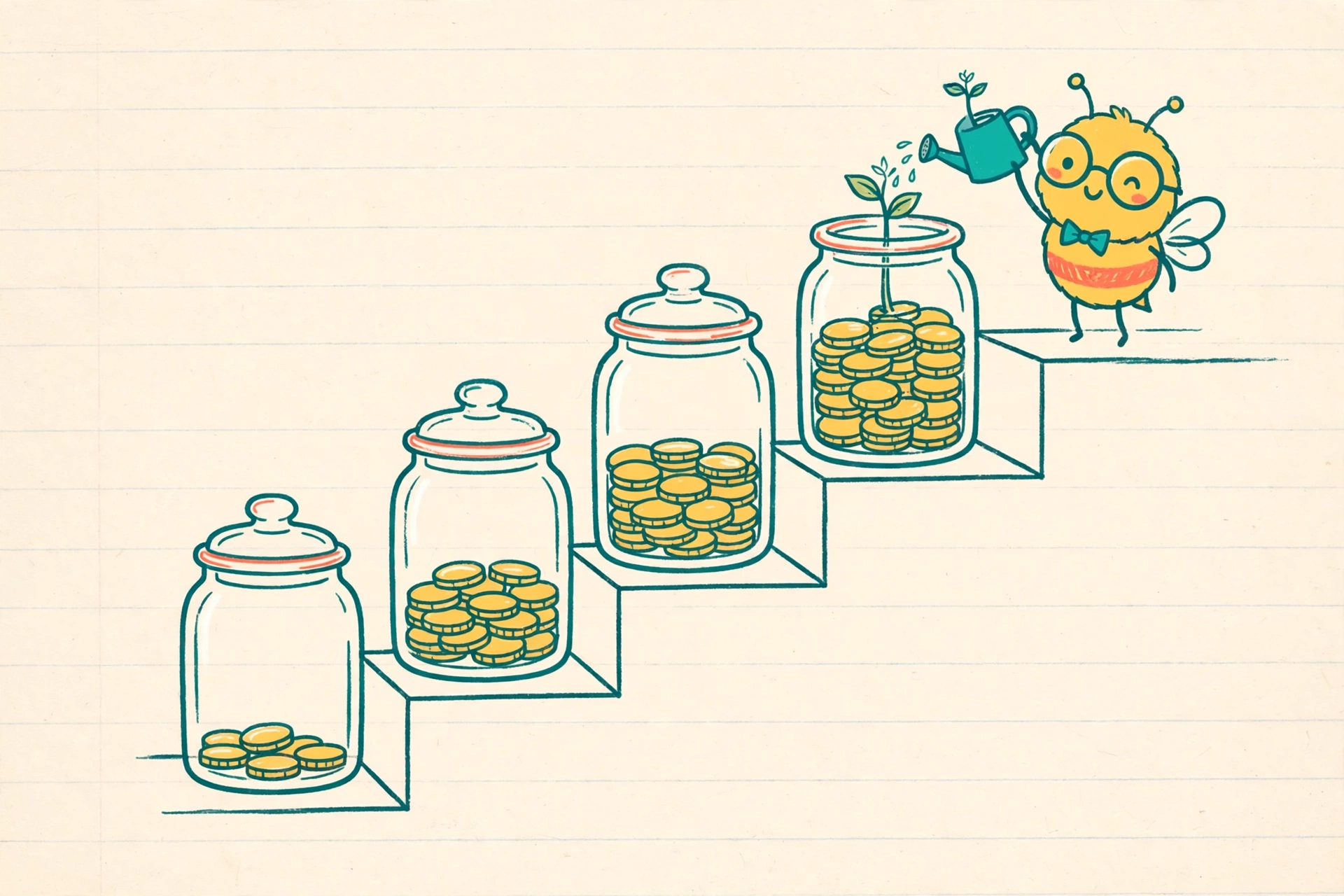
- Raise it 1 percent at a time. Every few months, or whenever you get a raise, bump the percentage by one point. On $3,800 of take-home pay, one point is $38. Small enough to shrug at. Big enough to matter by December.
Wealthy, our bee with the round glasses, calls step four “the quiet raise you give yourself.” He is smug about it. He is also not wrong.
Run your own savings goal
Want to see what your percentage could build toward a real goal, like a $1,000 cushion or a down payment fund? Plug your numbers into this savings goal calculator and play with the monthly amount.
Try two versions: the percentage you picked above, and one point higher. The gap between those two finish dates is usually smaller than people fear, and seeing it in black and white makes the extra point easier to choose.
What if your paycheck is different every month?
If your income swings, save a percentage of each check instead of a fixed dollar amount, and set that percentage using one of your slower recent months as the base. In a strong month, the transfer is bigger and your cushion grows faster. In a lean month, it shrinks on its own, so the habit survives instead of snapping.
Gig workers, servers, freelancers, anyone with tips or commissions: this is your version of the plan. The percentage stays steady while the dollars dance around it. One habit, two speeds.
One guardrail helps here. In a genuinely good month, let the extra sit in savings for a week before you decide it is spending money. Bonuses and big commission checks have a way of feeling like prizes. Give them a few days to turn back into paychecks in your head.
Keep the slice somewhere slightly inconvenient
Where the money lands matters more than people expect. If your savings sit in the same checking view you stare at every day, they read as spendable. The balance looks bigger than it really is, and small treats start volunteering to fix small moods.
A separate savings account fixes most of that without any willpower. Same bank is fine. The transfer is instant, the account shows up in the same app, but the money lives behind one extra click, and that click is weirdly powerful at 11 p.m. in an online checkout.
Some savers go one step further and keep the cushion at a different bank entirely. Moving it back takes a day or two, which is the whole point. Emergencies that can wait a day are covered. Impulse buys that cannot wait usually cannot survive the wait either.
Do not overthink the interest at this stage. A starter cushion earns what it earns. The habit of feeding it every payday is the part that changes your year. You can shop around for a better rate once there is a balance worth shopping for.
Quick answers
Three questions we hear whenever this topic comes up, answered short:
Q: Is 20 percent the “right” amount to save?
It is a popular benchmark from the 50/30/20 rule, not a law. If rent takes half your pay, 20 percent may not fit yet. A smaller percentage you actually repeat beats a big one you quit by spring.
Q: Should I save while I still have credit card debt?
Many people do a little of both. They build a small starter cushion first, often a few hundred dollars, so one surprise bill does not go straight back on the card. Then extra money goes toward the high-interest balance while the small automatic transfer keeps running.
Q: When should I raise my savings percentage?
At moments that do not pinch: when a raise lands, when a loan or subscription payment ends, or simply every few months by a single point. Raising it when money is arriving anyway means your day-to-day life barely notices the change.
So, back to Dot’s question at the top. How much of the check stays yours? Start with a slice you can defend, even a thin one. Automate it. Then fatten it a point at a time, on purpose, while nobody is watching. That is the whole trick, and it works on almost any paycheck.
For education only, not financial advice.
This article was created with AI assistance and reviewed by our editorial team before publishing.