
How to Break the Paycheck-to-Paycheck Cycle
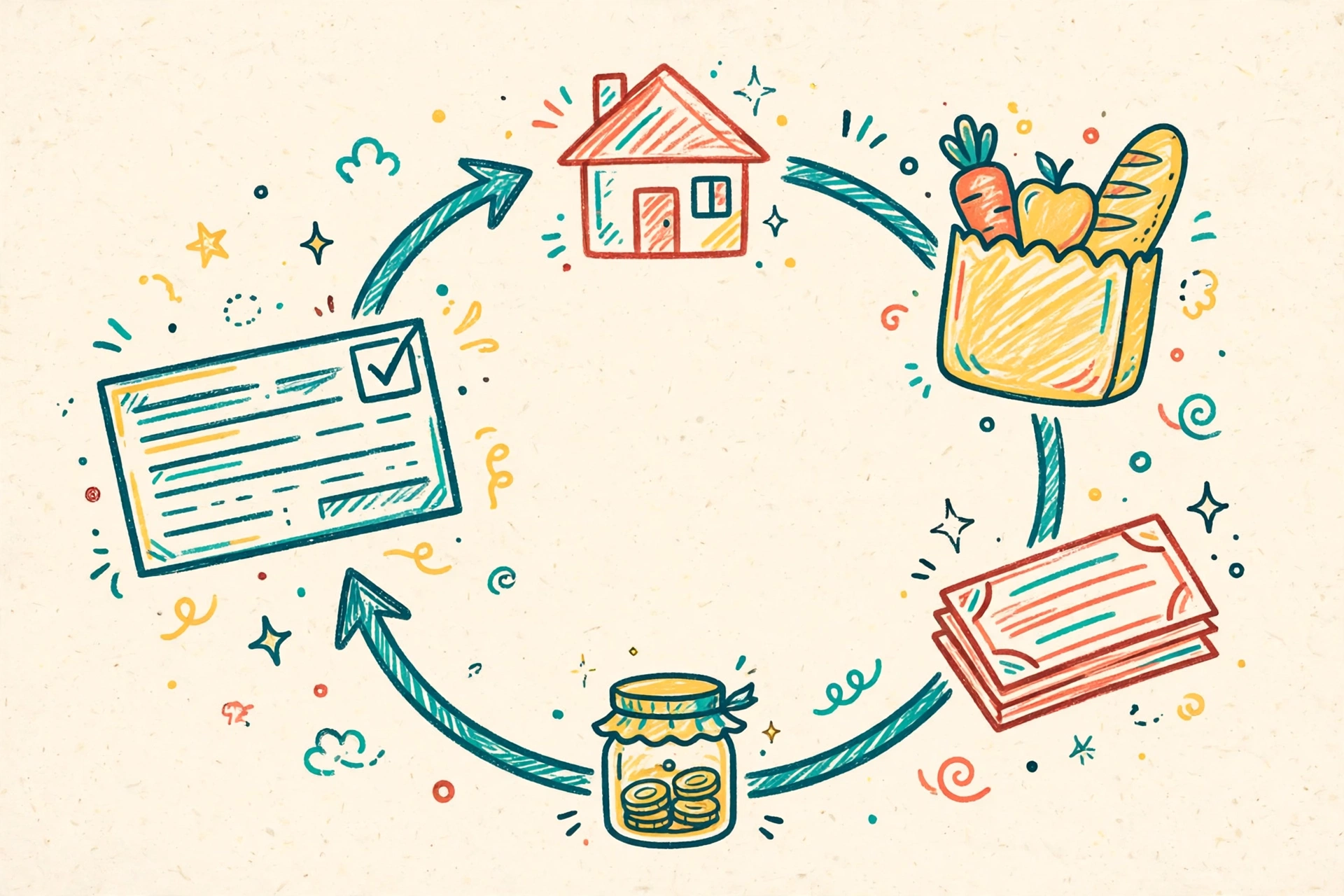
Breaking the paycheck-to-paycheck cycle doesn’t start with earning more. It starts with timing. You move one or two bills, you build a small buffer that stays in checking, and you run the same short routine each payday until the last three days before payday stop feeling scary.
Why the last few days feel so tight
Payday looks fine. Rent is paid, the fridge is full, and your balance looks almost comfortable. Then day nine hits.
A utility bill lands. Gas costs more than you guessed. A subscription you forgot about renews. Suddenly you’re counting days, not dollars.
Dot asked the obvious question. “If the money was there on Friday, where did it go?”
Wealthy didn’t talk about willpower. “Most of it went exactly where you sent it,” he said. “It just left at the wrong time.”
That’s the part people miss. A budget can add up on paper and still fail in real life if five bills leave before your second paycheck arrives. The math works. The calendar doesn’t.
You’re not alone in that squeeze, either. According to the Federal Reserve’s Economic Well-Being of U.S. Households in 2025 report, 63 percent of adults said they would cover a $400 emergency expense with cash or its equivalent, which means 37 percent wouldn’t cover it fully that way. And 12 percent of all adults said they wouldn’t be able to pay it at all, according to data from the Federal Reserve.
Read those numbers plainly. Plenty of working households have income. What they don’t have is slack.
Find the low point, not the average
Don’t start with your payday balance. Start with the ugly number.
Pull up your last three pay cycles. For each one, write down the lowest balance in the day or two right before payday. Not the average. Not the balance after rent cleared. The low point.
Was it $210? $47? Negative, saved only because a transfer happened to land?
That low point tells you the truth about your month. If it dips near zero every cycle, you don’t have a spending mystery. You have almost no room for a bill to arrive a day early or a paycheck to arrive a day late.
Write the three low points on one line. You’ll see the pattern fast. And once you see it, you can fix the right thing.
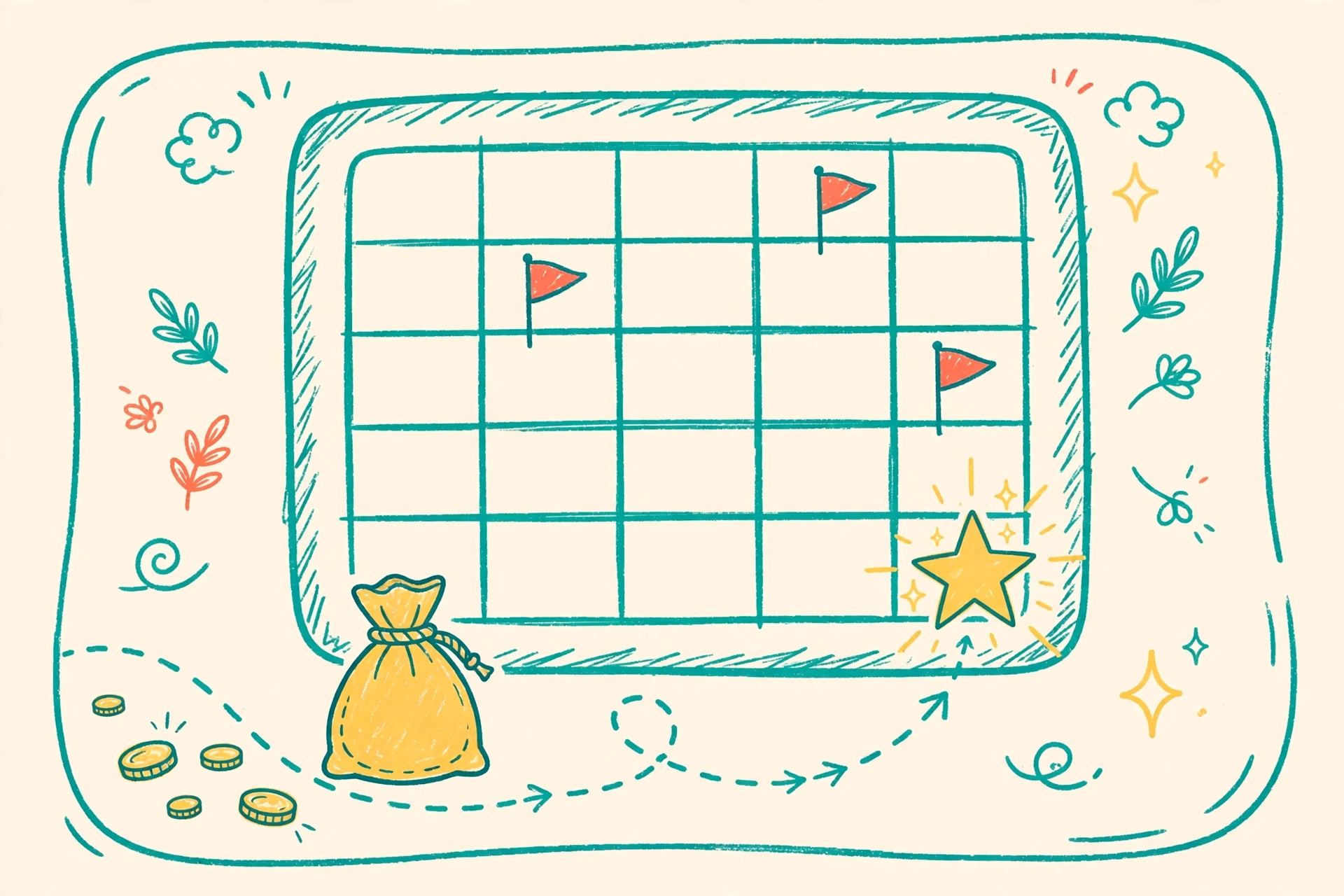
Timing problem or spending problem? They’re different.
Here’s a quick test you can do tonight.
Add up one month of take-home pay. Now add up one month of bills, food, gas, and other basics. Don’t include extras yet.
If pay covers the basics with some room left, but your account still empties, that’s mostly timing. Bills cluster in the wrong week. A buffer and a calendar fix will help a lot.
If pay doesn’t cover the basics at all, that’s a gap. A calendar trick won’t close it. You’ll need to cut a basic cost, raise income, or get help with a bill — and there’s no shame in naming that early. Pretending a gap is a timing problem wastes months.
Most households land in between. Some timing trouble. Some spending that crept up. One streaming service became four. Takeout filled the nights when everyone was tired. That’s normal life, not failure.
So don’t try to fix everything at once. Fix timing first. It’s cheaper, it’s faster, and it gives you breathing room to look at spending with a clear head.
Build a starter buffer that lives in checking
A buffer isn’t an emergency fund. Don’t mix them up.
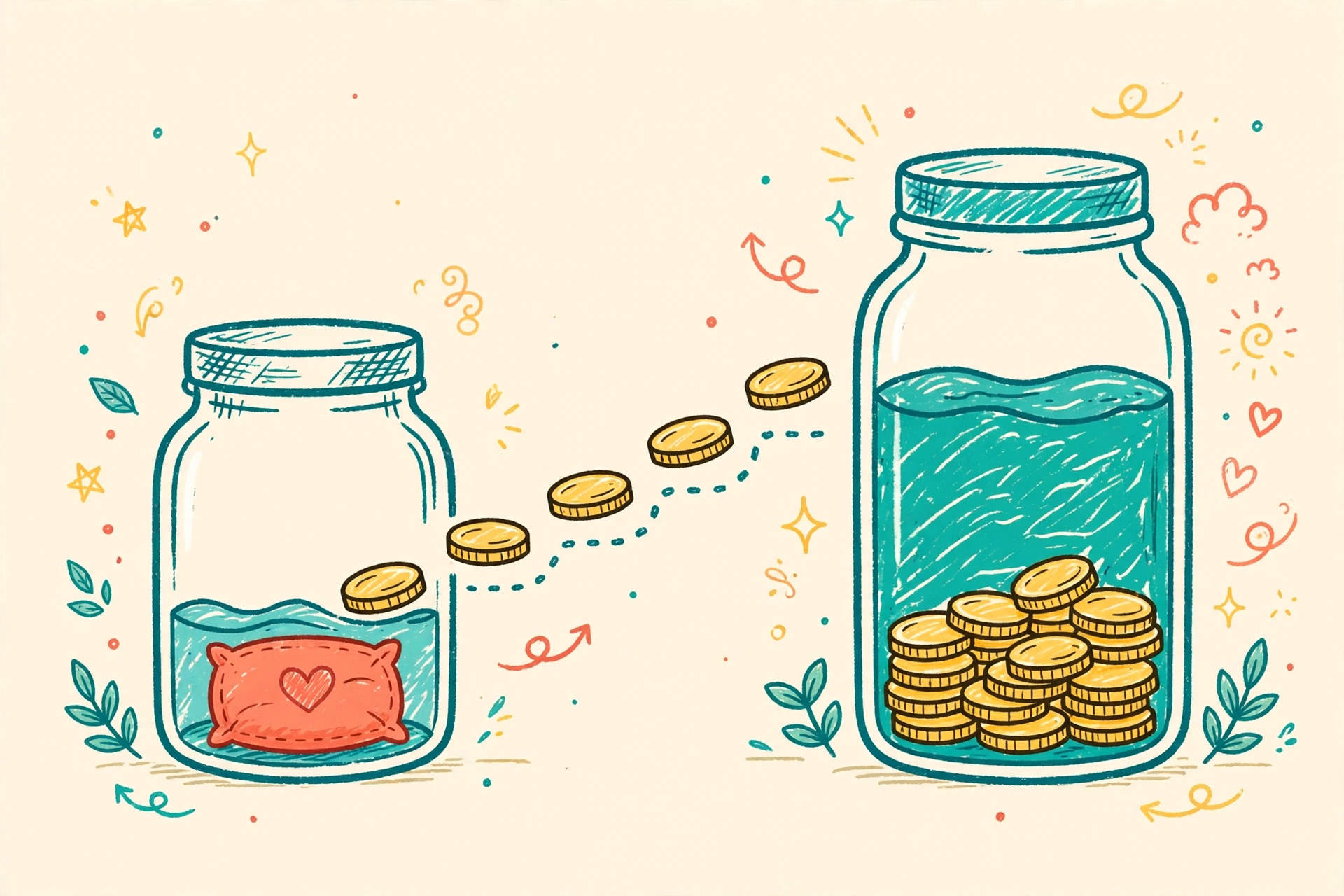
An emergency fund sits in savings for big shocks. A car repair. A lost job. A buffer sits in checking and does one boring job: it keeps your balance from hitting zero between paychecks.
Start small on purpose. Pick a floor you won’t let checking fall below.
For a lot of people, a starter floor might be $200 or $300. That’s an example, not a rule. If your low point is usually $40, even $150 changes the feel of the whole month. If your bills are larger and lumpier, you may want a bigger floor later. Later is fine.
How do you build it without breaking the month you’re in? In slices.
- Move a small fixed amount to savings on payday, even $25, and treat the checking floor as money that’s already spent
- Park any odd extra there first — a rebate, a sold item, a shorter grocery week
- Once the floor holds for a full cycle, stop. Don’t keep draining checking to grow it faster.
Used the buffer? Good. That’s what it’s for. A bill landed early and you didn’t pay an overdraft fee or put groceries on a card. Write down what it covered, then refill it in slices again. Slow is fine. Slow still counts.
A payday routine that takes about 15 minutes
Routines beat motivation. Motivation fades by Tuesday.
Try this order on payday, before you spend anything fun:
- Check what’s already scheduled. Look at pending bills and card payments for the next 14 days. No surprises.
- Cover the basics for this cycle. Rent or mortgage share, utilities, food money, gas, minimum payments. In that order.
- Move your slice. Send your buffer amount or savings amount now, while you’re looking at it. Don’t leave it for “later this week.”
- Give the rest a job. What’s left is your spending money until next payday. Say the number out loud. $340 feels different when it’s named.
- Look at one calendar date. Just one. What’s the biggest bill before next payday, and on what day does it land?
That’s it. Fifteen minutes. Coffee still warm.
Dot liked step three least. “So I move money away from myself, on purpose?”
“You move it closer to future-you,” Wealthy said. “She’s the one standing in the grocery line on day twelve.”
Try your own numbers
Want to see how a simple needs, wants, and savings split looks on your actual pay? Run your take-home pay through this budget calculator and compare the split with the low point you wrote down earlier.
Don’t treat the split as a grade. If rent eats more than half your pay, the split will show it, and that’s information, not a verdict. Use it to pick one move, not ten.
Shift one bill, not ten
Here’s a move people skip because it sounds too small.
Call one company. Just one. Ask if you can move your due date by a week or so, closer to your second paycheck. Many utilities, card issuers, and phone companies will shift a due date if you ask, though terms vary by company, so check yours directly.
Pick the bill that causes the most pain. The one that always lands in the thin week.
Moving it won’t save you a fortune. It does something better at first. It spreads the month out. Two calmer weeks beat one brutal week and one loose week, every time.
Got paid twice a month but your biggest bills all sit in the first half? Splitting rent or a large bill into two smaller planned amounts, held in checking until the due date, can smooth that same bump. You aren’t paying extra. You’re just not asking one paycheck to do all the heavy lifting.
Months when it still doesn’t stretch
Some months won’t stretch, no matter how tidy the routine is. Hours get cut. A kid gets sick. The car picks the worst week.
When that happens, act early, not late.
Call the biller before the due date and ask what options exist for this cycle. Check whether your utility or local assistance programs can help with a specific bill, and read the terms before you agree to anything. If food is the pressure point, a local food pantry is a practical tool for a hard week, not a last resort to feel bad about.
And skip the fixes that make next month worse. A high-cost short-term loan taken to feel calm today usually hands the panic to next payday, with a fee attached. If essentials and minimum payments already add up to more than your pay, that’s a signal to get free, nonprofit credit counseling or local help, not to try harder at a spreadsheet.
One bad month doesn’t erase progress. Watch what happens over three cycles instead. Is the low point creeping up? Are the last days less frantic? That’s the trend that matters.
Questions people ask a lot
How much buffer should I keep in checking?
Start with a floor that covers your worst week, not an ideal month. For many people a starter floor of a few hundred dollars changes the cycle, and you can raise it later once it holds. The right size depends on how lumpy your bills are and how often you’re paid.
Should I build a buffer or pay extra on a card first?
Many people do a tiny buffer first, while still making minimum payments, so one early bill doesn’t push new spending back onto the card. Then extra money can go to the card. Your interest rates and due dates matter, so run your own numbers before you decide.
How long does it take to break the cycle?
It often takes a few pay cycles to feel a change, because you’re building the floor in slices and moving due dates one at a time. Judge it by your low point over three cycles, not by one payday.
What if I’m paid once a month?
Split the month on paper into two halves and run the payday routine twice: once on payday, once mid-month. Hold the second half’s bill money in checking and don’t count it as spending money in week one.
Does a budget app fix this on its own?
No. An app can show you dates and balances, which helps, but the fix is the routine: check what’s scheduled, cover basics, move a slice, and name what’s left. Paper does that too, if you’ll actually use it.
For education only, not financial advice.
This article was created with AI assistance and reviewed by our editorial team before publishing.