
Estimated Taxes: Who Pays and When They’re Due
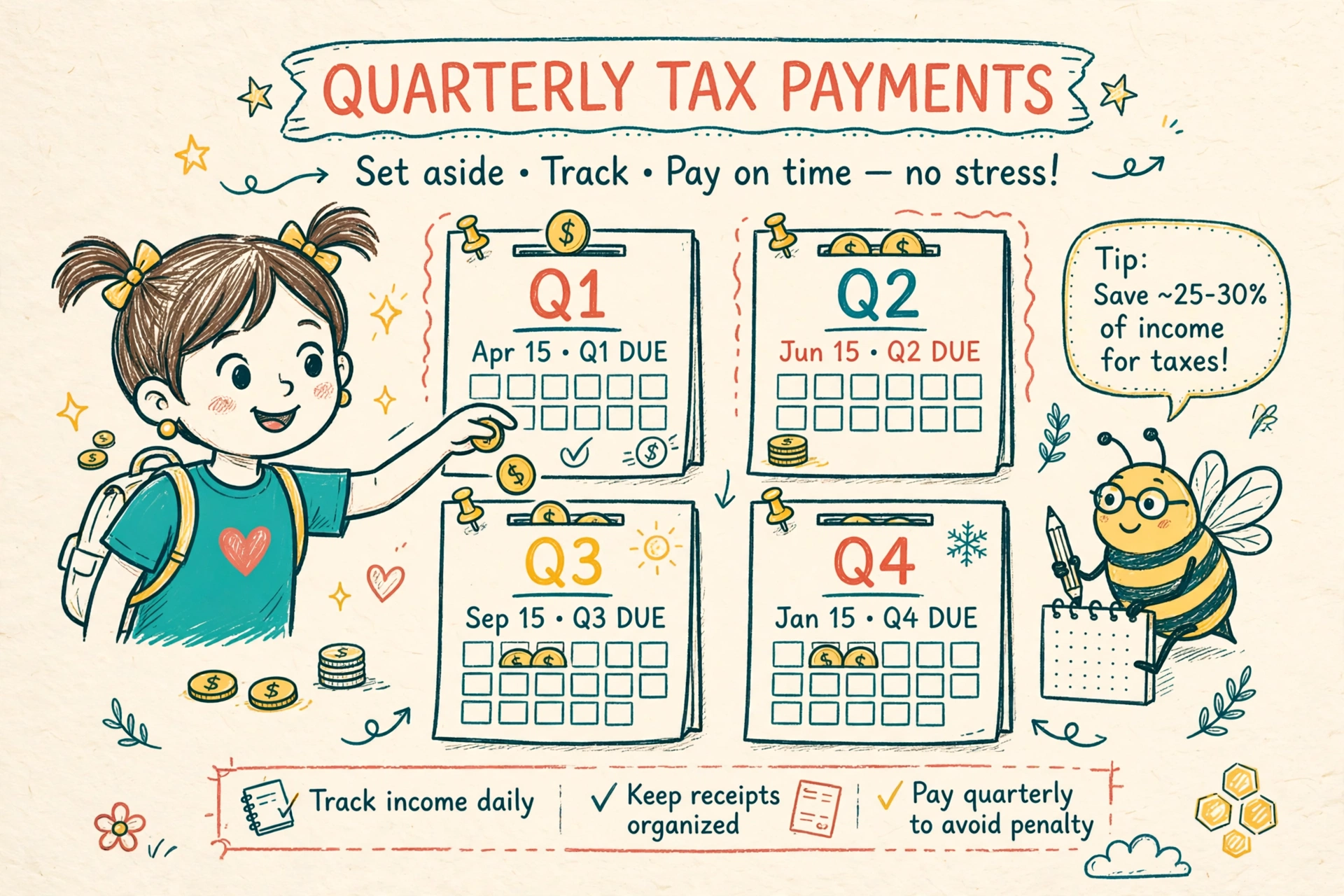
If you earn money with no tax withheld — freelance work, a side business, rent, or investment income — the IRS may expect estimated tax payments four times a year. Miss the dates or pay too little, and you can owe a penalty, even if you end up due a refund.
Why the IRS doesn’t wait until April
Most employees never think about this. Tax comes out of each paycheck before the money lands, so by filing time they’ve already paid most of what they owe. Nobody handed them a bill in April. The system quietly took its share all year.
Freelance pay doesn’t work that way. Neither does rent from a small property, or a side shop, or income from selling things online. The check arrives whole. No withholding. No quiet deduction.
Dot put it bluntly. “So the money looks like mine, but part of it isn’t?”
Wealthy nodded. “That’s exactly it. You’re just holding it for a bit.”
According to the IRS, the federal income tax is a pay-as-you-go system. You pay tax as you earn or receive income during the year, either through withholding or through estimated tax payments. Estimated taxes are simply how people without enough withholding do that paying as they go.
Who actually has to pay?
Here’s the basic test. According to the IRS, individuals generally have to make estimated tax payments if they expect to owe tax of $1,000 or more when their return is filed, after subtracting withholding and refundable credits.
Under $1,000? You can usually settle up when you file. At or over it? You’re probably in estimated tax territory.
That group is wider than most people guess. Freelancers and independent contractors, yes. But also landlords, people with a profitable side business, investors with income that had no withholding, and employees whose paycheck withholding just isn’t keeping up with other income on the side.
You don’t need every kind of income to trigger this. One solid freelance client can do it. One busy summer of side work can do it.
And here’s a trap worth knowing early. According to the IRS, you may be charged a penalty for underpayment even if you’re due a refund when you file. A refund at the end doesn’t erase a missed payment in the middle. The timing matters, not just the total.
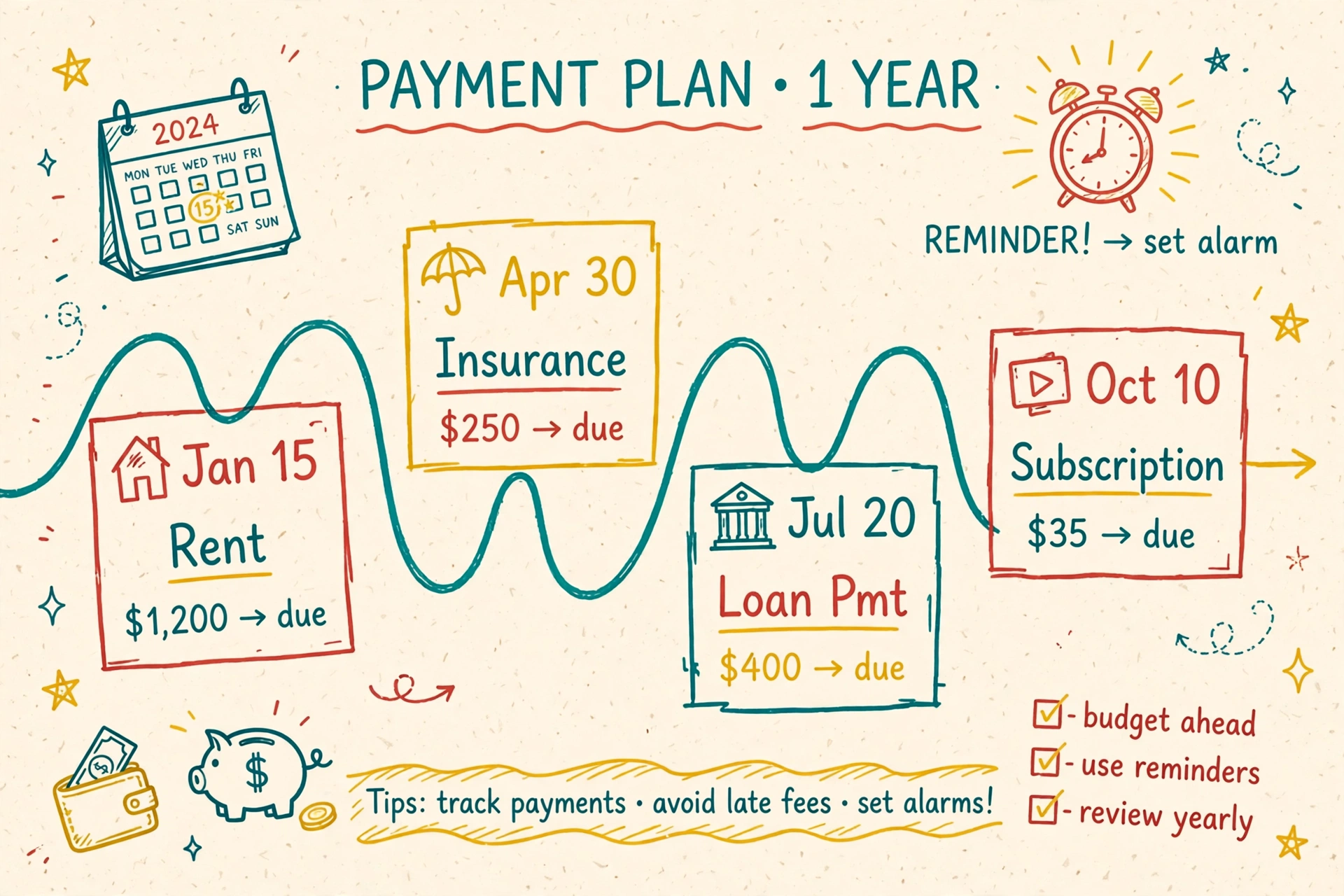
The four due dates, which aren’t really quarterly
People call these quarterly payments. The calendar disagrees a little.
According to the IRS Form 1040-ES schedule, the year splits into four payment periods, and they aren’t the same length. The second period covers just two months. The third covers three. If you assume neat three-month blocks, June will surprise you.
| Income earned | Payment due |
|---|---|
| January 1 to March 31 | April 15 |
| April 1 to May 31 | June 15 |
| June 1 to August 31 | September 15 |
| September 1 to December 31 | January 15 of the next year |
Those dates move a bit in real life. According to the IRS, if a due date falls on a Saturday, Sunday, or legal holiday, the payment is on time if you make it the next business day. So check the exact dates for the year you’re paying. Don’t just copy last year’s sticky note.
Put all four in your calendar the day you realize you need them. Not one. All four. June 15 sneaks up fast because it follows April by only two months, and plenty of first-timers miss it for exactly that reason.
How much should you pay? Start with last year’s return
This is where people freeze. How are you supposed to know this year’s tax before the year ends?
You’re not. Not exactly, anyway. The IRS gives you a safety net instead, and it’s got a name: safe harbor.
According to the IRS, most taxpayers can avoid the underpayment penalty if they pay at least 90% of the tax for the current year, or 100% of the tax shown on the prior year’s return, whichever is smaller. One catch for higher earners. According to the IRS, if your prior-year adjusted gross income was more than $150,000, you use 110% of the prior year’s tax instead of 100%. That threshold is $75,000 if you’re married filing separately, according to the IRS.
Why do so many people aim at the prior-year number? Because it’s known. You can read it right off last year’s return. This year’s number is still a guess in June.
Here’s a made-up example, just to show the shape of it. Say last year’s return showed $12,000 of total tax, and your income was under that $150,000 line. Paying $12,000 across the year — say $3,000 at each of the four due dates — would meet the prior-year target in this example. If this year turns out bigger, you’d still owe the extra tax when you file. Safe harbor shields you from the penalty. It doesn’t shrink the bill itself.
Dot frowned at that. “So I can do it right and still owe more?”
“Yep,” Wealthy said. “Right means no penalty. It doesn’t mean no balance due.”
What if your income jumps around?
Real freelance income rarely arrives in four neat piles. One big project in March. Nothing in May. A rush in October.
Equal payments can feel wrong in a year like that, and the IRS has an option for it. According to the IRS, you may be able to lower or avoid a penalty by annualizing your income and making unequal payments, using Form 2210. In plain English, you match each payment more closely to what you actually earned in that period. It asks for more paperwork. For very uneven income, it can be worth it.
There’s one more quirk, and it’s a useful one. According to the IRS, withholding is treated as paid evenly through the year, no matter when it was actually withheld. Estimated payments don’t get that treatment — they count from when you pay them.
So if you also have a job with a paycheck, raising your withholding later in the year can sometimes cover an early gap in a way a late estimated payment can’t. Talk to a tax professional before you rely on that move, though. The details depend on your full picture.
How to pay without turning it into a project
You don’t need fancy software for the basic routine. You need a system you’ll actually repeat.
- Work through the worksheet on Form 1040-ES, or use last year’s tax as your safe harbor target, as described above.
- Set the money aside as income arrives, in a separate savings pot you don’t raid for other bills. Waiting until the due date to find the money is where most of the pain lives.
- Pay on or before each due date. According to the IRS, you can pay online through IRS Direct Pay from a bank account, and the IRS also offers other electronic options listed on its payments page. Pick one method and stick with it.
- Save proof of every payment — the confirmation, the date, and which period you applied it to. Future you, staring at a notice, will want that folder.
- Re-check your estimate after any big change. A lost client, a new contract, a move. Your payments should follow your income, not last spring’s guess.
That’s the whole loop. Earn, set aside, pay, keep the receipt. Repeat four times.
Mistakes that trip people up
- Waiting until April. Paying the full amount at filing time doesn’t undo three missed due dates. The penalty looks at each period on its own.
- Forgetting June. The second payment comes just two months after the first. It’s the easiest one to miss, by far.
- Applying a payment to the wrong year. When you pay online, you choose the tax year and form. A payment credited to the wrong year looks, to the system, like a payment you never made.
- Spending the tax pot. If the money sits in your everyday checking account, it will quietly become groceries and gas. Separate pot. Boring, but it works.
- Guessing once and never looking again. Your income changed. Shouldn’t your estimate?
Questions people ask about estimated taxes
Do I need estimated payments if I also have a regular job?
Maybe. It depends on the totals. If your paycheck withholding covers enough of your combined tax, you may not need separate payments. If a side income leaves you expecting to owe $1,000 or more after withholding and credits, according to the IRS general rule, estimated payments come into the picture. Some people raise withholding at the job instead. A tax professional can run your specific numbers.
What happens if I miss a due date?
Pay as soon as you notice. According to the IRS, the underpayment penalty is figured for each payment period, so paying late is still better than paying even later. Don’t wait for the next due date to fix the last one.
Can I skip the January payment?
Sometimes. According to the IRS Form 1040-ES instructions, you don’t have to make the January payment if you file your return and pay the full amount owed by the early filing date given in that year’s form instructions. Miss that filing date, and the January payment was due after all. Check the current year’s instructions before you count on this.
Are state estimated taxes the same thing?
No, they’re separate. Many states run their own estimated tax schedules for income with no withholding, with their own forms and dates. Your state’s tax agency publishes its schedule. Handle federal and state as two lists, not one.
For education only, not financial advice.
This article was created with AI assistance and reviewed by our editorial team before publishing.